
 by
by You’ve built a beautiful fashion blog. Traffic is growing. Followers are engaged. But your monetization? Disappointing.
Here’s what most fashion bloggers get wrong — they think AdSense is the only option, or worse, they stuff their sidebar with low-paying display networks that pay $0.50 CPMs and make their site look cheap. I’ve tested dozens of ad networks specifically with lifestyle and fashion content over the past three years, and the performance gap between networks is massive. Not just in CPM rates — in how they treat your aesthetic, your audience, and your brand.
Let me show you which ad networks actually work for fashion content in 2026, and which ones will tank your earnings while cluttering your site.
Why Most Ad Networks Fail Fashion Blogs
Fashion and lifestyle blogs have a specific problem. High engagement doesn’t always equal high CPMs.
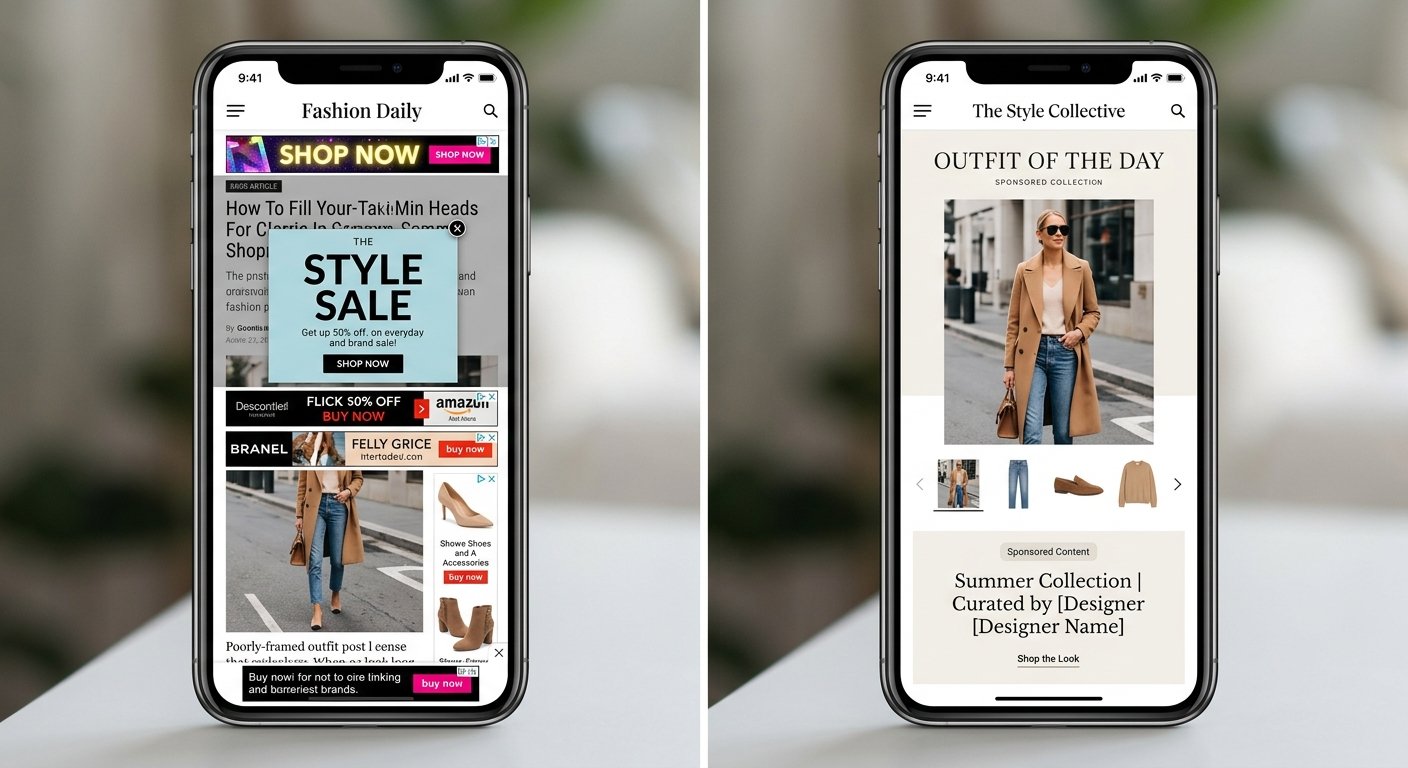
Your audience is mostly mobile, mostly female, mostly browsing during breaks or commutes. They scroll fast. They’re visually picky. And they hate anything that disrupts the aesthetic flow of your content. Standard banner networks treat your blog like a tech news site — ugly 300×250 boxes that clash with your design and pay terribly because advertisers don’t bid high on standard display inventory anymore.
Here’s the trap: you think more ad units equals more money. It doesn’t. I watched a fashion blogger in London add eight ad placements across her articles. Her RPM dropped 40% because bounce rates spiked and session duration tanked. Google’s algorithm noticed. Her organic traffic fell within two months.
Quality matters more than quantity in this niche. Always.
Mediavine — The Gold Standard for Fashion Content
Mediavine is where most successful fashion bloggers end up, and for good reason.
You need 50,000 monthly sessions to apply — not page views, sessions. That’s the barrier. But if you qualify, Mediavine consistently delivers $15-$35 RPMs for US/UK fashion traffic, which is double or triple what standard networks pay. Their ad units are designed to blend with editorial content. Sticky sidebar ads. In-content units that don’t scream “advertisement.” Video players that actually match your site’s aesthetic.
I’ve worked with fashion bloggers running Mediavine who report $3,000-$8,000 monthly earnings on 100,000-200,000 sessions. That’s not guaranteed, but it’s realistic for Tier 1 traffic in fashion and lifestyle niches. The approval process is strict — they’ll reject you if your content is thin, if your site speed is poor, or if your design is a mess. But that’s exactly why their CPMs are high. Advertisers trust Mediavine inventory.
Payment terms are net-65, which is slower than most networks. You’ll wait two months for your first payout. Minimum threshold is $25 via direct deposit. If you’re outside the US, PayPal and Payoneer are available, though some international publishers report delays.
One downside: Mediavine controls everything. You can’t cherry-pick which ad formats run or manually place units. Their algorithm decides. Most of the time it works beautifully, but if you’re a control freak about your site layout, this might frustrate you.
AdThrive — Premium Network with Higher Traffic Requirements
AdThrive sits slightly above Mediavine in selectivity and slightly below in flexibility.
The approval threshold is 100,000 monthly page views from the US alone, which immediately disqualifies most international fashion blogs or newer sites. But if you qualify, AdThrive delivers some of the highest RPMs in the industry — often $20-$40 for fashion content with strong US traffic. Their account management is hands-on. You get a real person who reviews your site, suggests optimization, and responds when you have questions.
What makes AdThrive particularly strong for fashion blogs is their advertiser relationships. Luxury brands, beauty companies, and fashion retailers bid aggressively on AdThrive inventory because the network pre-vets publishers for quality. Your blog sits alongside major lifestyle publications, which lifts the perceived value of your ad impressions.
The trade-off? Even less control than Mediavine. AdThrive’s team decides your ad layout, and they lean heavily into video units, which can slow site speed if you’re not careful. Payment is net-45 with a $25 minimum. International publishers can join, but the US traffic requirement makes it tough for global lifestyle blogs to qualify.
If you’re exclusively targeting US fashion audiences and you’ve got the traffic volume, AdThrive is worth the application hassle. If your audience is global or your traffic is below six figures, skip it and focus on networks with lower barriers.
Ezoic — Best for Growing Fashion Blogs Under 50K Sessions
Ezoic is where you start if you can’t yet qualify for Mediavine.
There’s no traffic minimum, which makes Ezoic the go-to network for fashion blogs with 10,000-50,000 monthly sessions. The platform uses AI-driven ad testing to automatically optimize placements, sizes, and formats based on your specific audience behavior. It’s not as elegant as Mediavine’s approach, but it’s far better than manually managing Google AdSense.
Expect $5-$15 RPMs for fashion content depending on your traffic quality. That’s lower than premium networks, but significantly higher than AdSense alone, especially for mobile-heavy fashion traffic. Ezoic also lets you run AdSense alongside their platform, which stacks earnings without violating AdSense terms.
The setup is clunky. You’ll need to integrate via Cloudflare or name servers, and the initial learning curve frustrates a lot of publishers. The AI testing phase takes 2-4 weeks, during which your RPMs might fluctuate as the system finds optimal placements. Some fashion bloggers complain that Ezoic’s ads look dated or slow their site speed, and that’s partially true — you need to actively monitor your Core Web Vitals and disable ad units that hurt performance.
Payment threshold is $20 via PayPal, Payoneer, or direct deposit. Net-30 terms, which is faster than Mediavine or AdThrive. International publishers are welcome, and Ezoic works reasonably well with Tier 2-3 traffic, though CPMs drop significantly outside English-speaking markets.
Monumetric — Solid Mid-Tier Network for 10K+ Sessions
Monumetric sits between Ezoic and Mediavine in both selectivity and performance.
You need 10,000 monthly page views to apply, which is achievable for most fashion blogs within their first year. CPMs typically run $10-$20 for US fashion traffic, which is competitive for mid-tier networks. Monumetric’s ad layouts are cleaner than Ezoic’s and more customizable than Mediavine’s, which appeals to fashion bloggers who care deeply about their site aesthetic.
The setup fee is $99 upfront, which immediately turns off a lot of publishers. But I’ve seen fashion bloggers recoup that fee within the first month if their traffic is solid. Monumetric’s account managers are responsive, and they’ll work with you to adjust ad density if you feel your site looks too cluttered.
One frustration: Monumetric’s approval process is inconsistent. I’ve seen high-quality fashion blogs get rejected while lower-quality sites get approved. There’s no clear explanation for the variance, and the support team doesn’t always provide actionable feedback if you’re turned down.
Payment is net-30 with a $10 minimum via PayPal or direct deposit. International publishers can join, but like most US-based networks, CPMs drop for non-US traffic.
Amazon Publisher Services (APS) — Best as a Header Bidding Partner
APS isn’t a standalone ad network — it’s a header bidding wrapper that layers on top of whatever primary network you’re using.
If you’re running Mediavine, AdThrive, or even AdSense, adding APS can boost your RPMs by 10-30% by bringing Amazon’s retail advertisers into your auction. Fashion and lifestyle content performs particularly well with APS because Amazon’s fashion, beauty, and home decor advertisers bid aggressively on publisher inventory adjacent to related content.
Setup requires some technical knowledge or a developer. You’ll integrate APS via Prebid.js or Google Ad Manager, which isn’t beginner-friendly. But the RPM lift is real. I’ve worked with fashion bloggers who added APS and saw their effective RPMs jump from $18 to $24 without changing anything else.
There’s no approval process beyond having an Amazon Associates account, and there’s no minimum traffic requirement. You can start testing APS even if you’re under 10,000 monthly sessions. The downside? APS doesn’t provide reporting transparency — you won’t see exactly how much revenue APS is contributing unless you cross-reference your Ad Manager reports, which most bloggers find confusing.
No direct payment from APS — revenue flows through your primary ad network or Ad Manager setup.
Frequently Asked Questions
What CPM rates should fashion blogs expect in 2026?
For US traffic on premium networks like Mediavine or AdThrive, expect $15-$35 RPMs. Mid-tier networks like Ezoic or Monumetric typically deliver $8-$18 RPMs. UK, Canada, and Australia traffic earns 60-80% of US rates. Tier 2 markets like India or Brazil usually see $2-$6 RPMs depending on the network and your niche specificity. Fashion content generally performs better than general lifestyle because advertiser demand is higher.
Can I run multiple ad networks on my fashion blog simultaneously?
Not directly. Premium networks like Mediavine and AdThrive require exclusivity — you can’t run them alongside other display networks. However, you can layer header bidding solutions like Amazon Publisher Services or Prebid on top of your primary network to increase competition for your ad inventory. If you’re using AdSense or Ezoic, you can sometimes stack networks, but it often violates terms of service or causes ad delivery conflicts. Check your contract before testing.
How much traffic do I need before applying to ad networks for fashion blogs?
AdSense has no minimum. Ezoic has no official minimum but works best above 10,000 sessions. Monumetric requires 10,000 page views. Mediavine requires 50,000 sessions. AdThrive requires 100,000 page views with significant US traffic. Focus on building quality content and reaching 50,000 monthly sessions before stressing about premium network approval — that’s the threshold where monetization becomes meaningful.
Do lifestyle blog monetization strategies differ from other niches?
Yes. Fashion and lifestyle audiences are mobile-heavy, which means ad viewability is lower and RPMs can suffer if your ad placements aren’t mobile-optimized. Visual appeal matters more in this niche — ugly ad units drive higher bounce rates, which tanks both your ad revenue and your SEO. Fashion content also benefits from native advertising and sponsored content more than standard display, so the best monetization strategy usually combines a premium ad network with direct brand partnerships and affiliate marketing.
Make the Switch — Here’s What to Do Next
You’ve got the data. Now execute.
If you’re under 10,000 sessions, start with Ezoic or stick with AdSense while building traffic. If you’re between 10,000 and 50,000 sessions, apply to Monumetric or keep optimizing with Ezoic until you hit Mediavine’s threshold. If you’re above 50,000 sessions and haven’t applied to Mediavine yet, you’re leaving serious money on the table — apply today.
Layer Amazon Publisher Services on top of whatever network you choose if you’re comfortable with light technical setup. Test for 30 days and watch your RPMs. If they don’t lift by at least 10%, roll it back.
At adnetworksreview.com, we test these networks with real publisher traffic and update our reviews quarterly as network performance shifts. Check our individual network reviews for approval walkthroughs, payment proof, and niche-specific CPM benchmarks. No fluff. No fake screenshots. Just real publisher insights.
lifestyle blog monetization, fashion blog advertising platforms, best CPM ad networks, fashion influencer ad networks