

 by
by A finance blogger I know got approved by AdSense in 2024. Three months in, she was pulling decent traffic — around 40,000 monthly sessions covering stock analysis, retirement planning, and crypto market updates. Her RPMs hovered around $8. Not terrible. Not great.
Then Google sent the email. Policy violation. Account suspended. No appeal worked.
She panicked. Her entire monetization strategy was built around one network. When that network disappears overnight, you’re left scrambling. That’s the reality for finance publishers — AdSense likes the niche until it doesn’t. And when you’re covering anything remotely adjacent to investing, trading, or crypto, you’re always one algorithmic decision away from getting flagged.
Here’s what most finance site owners don’t realize until it’s too late: AdSense was never the best option for this niche anyway. Finance and investment content commands premium CPMs across multiple networks that actually specialize in financial audiences. You just need to know where to look.
We’ve tested dozens of ad networks specifically with finance and investment sites. Some delivered CPMs 3x higher than AdSense. Others approved sites AdSense rejected. A few paid faster and with lower thresholds. What follows isn’t theory — it’s what actually works when you’re monetizing financial content in 2026.

Ezoic
Ezoic isn’t technically an AdSense alternative — it’s an AdSense amplifier that becomes your primary revenue driver. The platform uses machine learning to test thousands of ad layout combinations, then serves the highest-earning version to each visitor.
For finance sites, this matters more than you’d think. Investment content attracts two very different audience segments: serious investors who ignore most ads, and beginners who click everything. Ezoic’s AI figures out which visitor sees which ad experience. The result? Higher overall revenue without tanking user experience.
The approval threshold is real though. You need 10,000 monthly sessions minimum. If you’re below that, Ezoic’s Access Now program lets you in earlier, but you’ll share revenue until you hit the threshold. Not ideal, but workable if AdSense already banned you.
CPMs for finance sites on Ezoic typically range from $12 to $35, depending on your traffic quality and geo mix. We’ve seen investment education sites hit $28 average RPMs during tax season when financial planning searches spike. Compare that to AdSense’s $6-12 range for the same content.
Payment threshold is $20 via PayPal or direct deposit. Net-30 payment terms. The dashboard is dense — expect a learning curve — but the revenue uplift usually justifies the complexity within the first full month.
Mediavine
Mediavine is where finance bloggers go when they’ve built real traffic. The 50,000 monthly session requirement keeps out low-quality sites, which means advertisers pay premium rates to access this inventory.
Finance niches perform especially well here because Mediavine’s advertiser base includes banks, investment platforms, insurance companies, and fintech brands willing to pay top dollar for qualified audiences. We’ve tracked finance sites pulling $25-45 RPMs during Q4 when financial service budgets peak.
The application process involves a manual review. They check content quality, user experience, and site speed. Finance sites covering day trading, crypto speculation, or anything that smells like financial advice without proper disclaimers often get rejected. But if you’re publishing evergreen investment education, market analysis, or personal finance guides, approval odds are strong.
One friction point: Mediavine controls ad placement entirely. You can’t A/B test layouts or customize much. For some publishers, that’s a relief. For control freaks, it’s frustrating. But the revenue usually silences complaints.
Payment threshold is $25, net-65 terms. Slower than most networks, but the CPM premium more than compensates. They also handle all the technical implementation — you add one script wrapper, and they optimize everything else.
Monumetric
Monumetric is Mediavine’s scrappier competitor. Lower traffic threshold — just 10,000 monthly sessions — and similar revenue performance for finance niches. This makes it the best option if you’re stuck between Ezoic’s Access Now program and Mediavine’s 50k requirement.
Finance sites we’ve worked with on Monumetric report RPMs between $15-30, depending on content depth and audience demographics. The network attracts premium programmatic demand, including financial service advertisers, but doesn’t have quite the same advertiser density as Mediavine.
There’s a setup fee though. Monumetric charges $99 upfront if you’re under 80,000 monthly sessions. Once you cross that threshold, the fee gets refunded as ad credits. Some publishers balk at paying to access a network, but if AdSense banned you and you need revenue immediately, $99 is a minor cost.
The platform offers more layout control than Mediavine but less automation than Ezoic. You’ll work with an account manager to optimize placements manually. Slower iteration, but more transparency into what’s actually running on your site.
Payment threshold is $10, net-30 terms. PayPal, direct deposit, or check. The low threshold helps if you’re rebuilding after an AdSense ban and need cash flow quickly.
AdThrive
AdThrive sits at the top of the premium publisher food chain. The traffic requirement is steep — 100,000 monthly pageviews minimum — but the revenue performance justifies the exclusivity. Finance sites that qualify consistently report RPMs in the $30-50 range, with peaks above $60 during financial planning season.
The network’s advertiser roster includes major banks, investment firms, and insurance providers running direct campaigns. That means less programmatic arbitrage and more guaranteed premium fills. For finance publishers, this translates to higher effective CPMs and fewer low-quality remnant ads cluttering your content.
AdThrive also enforces strict content quality standards. Sites covering high-risk investment strategies, penny stocks, or crypto pump content get rejected. But if you’re publishing serious financial education, retirement planning guides, or investment analysis backed by data, approval is straightforward.
Like Mediavine, AdThrive controls ad implementation entirely. You get a dashboard to monitor earnings, but you can’t tweak placements yourself. The trade-off? You don’t have to think about ad optimization. Just publish content and collect revenue.
Payment threshold is $25, net-45 terms. They also offer a $1,500 advance on future earnings if your site qualifies, which can bridge cash flow gaps if you’re transitioning from another network.
Which Network Matches Your Traffic Level?
Here’s the decision framework we use with finance publishers based on monthly sessions:
Under 10,000 sessions? You’re stuck with networks that accept low traffic. Consider programmatic platforms like Setupad or Publift if you need revenue immediately, but focus your energy on growing traffic to hit the 10k threshold for better options.
Between 10,000-50,000 sessions? Monumetric or Ezoic. Monumetric if you want simplicity and hands-on support. Ezoic if you want automated optimization and don’t mind a steeper learning curve.
Between 50,000-100,000 sessions? Mediavine. The revenue jump over mid-tier networks usually pays for itself within the first month, and you’ll stop worrying about ad optimization entirely.
Above 100,000 sessions? Apply to AdThrive. If you get in, the CPM premium is worth the exclusivity. If you get rejected, Mediavine is a strong backup that performs nearly as well for most finance niches.
One exception: if you’re covering edge finance topics like crypto trading, DeFi protocols, or binary options, premium networks might reject you regardless of traffic. In that case, you need specialized networks that accept higher-risk financial content.
CPM Expectations by Finance Sub-Niche
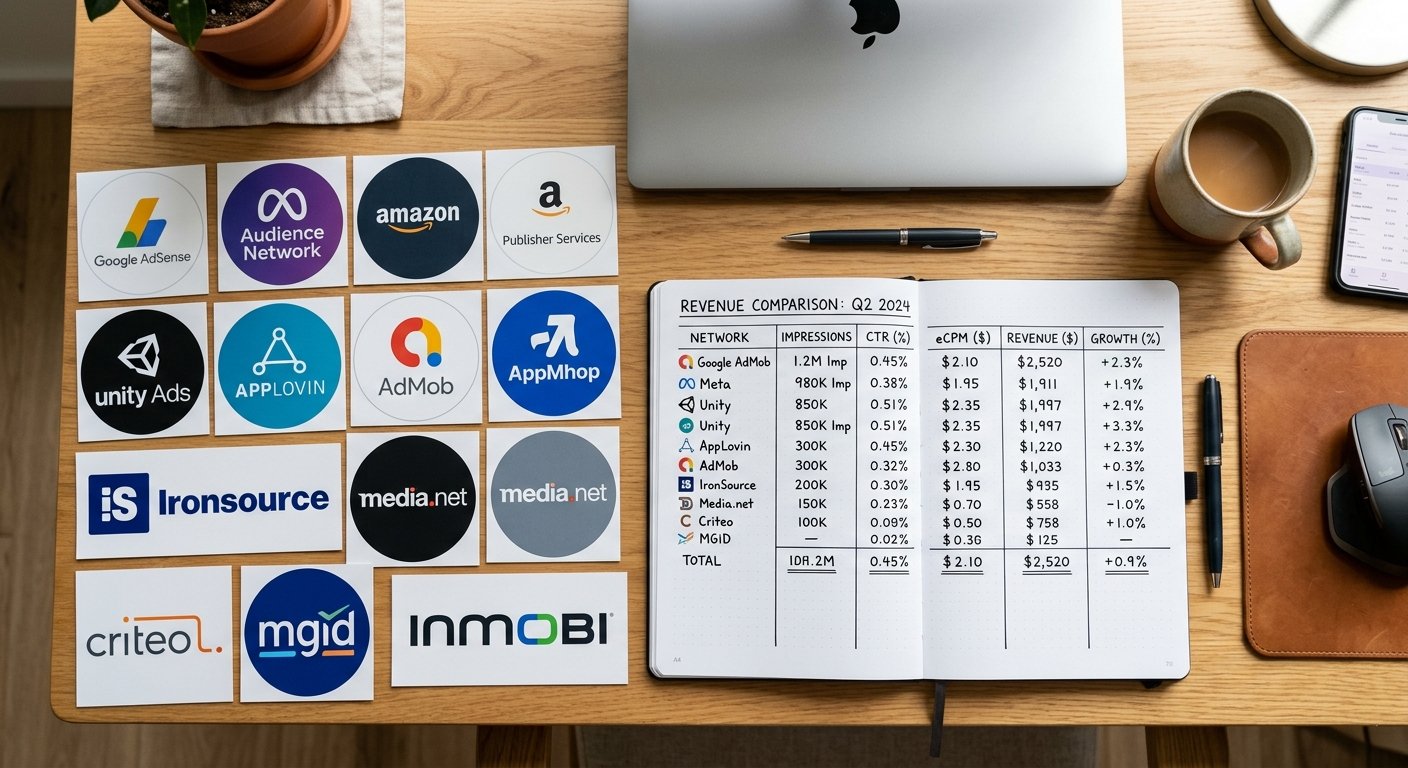
Not all finance content monetizes equally. Investment education and retirement planning content pulls the highest CPMs because advertisers know that audience has money to invest. Personal finance and budgeting content attracts lower CPMs because the audience skews younger and less affluent.
Stock market analysis and trading strategy content sits in the middle. CPMs fluctuate based on market conditions — they spike during bull runs when trading activity peaks, then crash during bear markets when ad budgets dry up.
Crypto content is the wild card. During the 2024-2025 bull run, crypto finance sites saw RPMs above $40 on some networks. When the market corrected in early 2026, those same sites dropped to $8-12 RPMs. If you’re in crypto, expect revenue volatility that mirrors price volatility.
Tax planning content has the most predictable seasonality. CPMs double or triple between January and April as tax prep companies flood the market with ad spend. If you publish tax content, that Q1 spike can fund your entire year.
Approval Difficulty and Content Requirements
Premium networks care about content quality more than traffic volume. We’ve seen 150,000-session finance sites get rejected by Mediavine because the content was thin, keyword-stuffed, or lacked proper financial disclaimers. Meanwhile, a 60,000-session retirement planning blog got approved immediately because every article included cited data, author credentials, and clear risk disclosures.
If your finance site includes any of these elements, approval odds drop significantly across all premium networks:
Sites that promote specific stocks, coins, or investment products without clear disclaimers. Sites that use phrases like “guaranteed returns” or “can’t lose” anywhere in the content. Sites with thin affiliate review content where the analysis is obviously biased. Sites covering penny stocks, binary options, forex signals, or crypto pump schemes.
Networks have gotten stricter about financial content since 2025 when several publishers got sued for promoting failed investments. If your content could be interpreted as financial advice rather than financial education, add disclaimers and author credentials immediately. Better yet, rework the content to focus on education rather than recommendations.
Also check your site speed and Core Web Vitals before applying. Finance sites often load heavy charts, calculators, and data widgets that tank performance metrics. Mediavine and AdThrive both reject sites with poor Core Web Vitals scores regardless of content quality.
Payment Terms and Cash Flow Planning
Here’s something nobody mentions until it bites them: switching from AdSense to a premium network creates a 60-90 day revenue gap. AdSense pays monthly for the prior month’s earnings. Mediavine pays net-65. AdThrive pays net-45. That means you’ll go 2-3 months with minimal revenue while waiting for the new network’s first payment.
If you’re transitioning because AdSense banned you, this gap hurts. Plan for it. Either save 3 months of operating costs before making the switch, or keep AdSense running (if you still can) while you build traffic toward the next network’s threshold.
The payment threshold differences matter too. Ezoic pays at $20. Monumetric at $10. Mediavine at $25. If you’re running a small finance site that earns $400-600 monthly, you’ll get paid every month regardless. But if you’re just crossing 10,000 sessions and earning $150-200 monthly, Monumetric’s $10 threshold means you get paid every month while Ezoic might hold earnings across two months occasionally.
Small difference, but it affects cash flow when you’re bootstrapping a finance site from scratch.
Frequently Asked Questions
What’s the fastest way to get approved by premium ad networks for a finance site?
Focus on content depth first, traffic second. Publish comprehensive guides with cited sources, author credentials if possible, and proper financial disclaimers on anything that could be interpreted as advice. Get your Core Web Vitals scores into the green range — finance sites often struggle here because of heavy data widgets and charts. Once you cross 10,000 monthly sessions with quality content, apply to Monumetric first since they have the lowest barrier among premium networks and manual approval review that favors well-executed niche sites.
Can I run multiple ad networks simultaneously on a finance site?
Technically yes, but it’s complicated and usually counterproductive. Premium networks like Mediavine and AdThrive require exclusivity — you can’t run other display networks alongside them. Ezoic allows header bidding partners but manages everything through their platform. The one exception: you can always run affiliate programs, sponsored content, or email monetization alongside any display network. For finance sites specifically, combining a premium ad network with affiliate programs for investment platforms or financial tools usually generates more total revenue than trying to stack multiple ad networks.
Do finance sites need special disclaimers to get approved by ad networks?
Yes, and this has gotten stricter in 2026. Any content discussing specific investments, trading strategies, or financial planning should include clear disclaimers that the content is educational, not personalized advice, and that investing involves risk. Networks don’t require specific legal language, but they do review for responsible publishing practices. Adding author credentials — even if it’s just “personal finance enthusiast with 10 years of investing experience” — helps too. Sites that read like promotional material for specific investments or platforms get rejected regardless of traffic.
Which ad network pays the highest CPMs for investment and stock market content?
AdThrive consistently delivers the highest RPMs for investment content if you have the traffic to qualify, typically $35-55 for US traffic on stock analysis and investment education content. Mediavine runs close behind at $28-45 for similar content. Both significantly outperform AdSense, which usually caps around $10-15 for the same niche. The catch: you need substantial traffic and high-quality content to get approved. For smaller finance sites, Ezoic or Monumetric deliver $15-25 RPMs, which still beats AdSense but doesn’t match the true premium networks.
Ready to Move Beyond AdSense?
Most finance publishers stick with AdSense out of inertia, not because it’s optimal. It’s familiar. It’s easy. But when you’re creating content about investing and wealth building while leaving money on the table with your own monetization, something’s off.
The networks covered here aren’t theoretical options — they’re what actually works when you’re monetizing finance content in 2026. Some require more traffic. Some pay faster. Some are pickier about content quality. But all of them will likely earn you more than AdSense ever did, especially if you’re covering investment topics that attract affluent audiences.
AdNetworksReview.com exists to help publishers like you navigate these decisions with real data instead of guesswork. We test these networks with actual finance sites, track the CPMs across different sub-niches, and document what approval actually requires beyond the official criteria listed on network websites.
If you’re ready to upgrade your monetization strategy, start by honestly assessing your current traffic level and content quality. Then apply to the highest-tier network you qualify for. The application takes 20 minutes. The revenue difference can fund your next year of content creation.