
 by
by Native Advertising Formats: Everything Publishers Actually Need to Know (2026)
Native advertising formats perform better than display — if you understand what you’re actually running. Most publishers think “native” means content recommendation widgets, miss every other format, and wonder why CPMs stay flat. We’ve tested most major native ad networks across content sites, mobile apps, and niche verticals. The format matters less than the placement and the audience match. But picking the wrong network for your traffic type costs you money every single day.
What Native Advertising Formats Actually Are
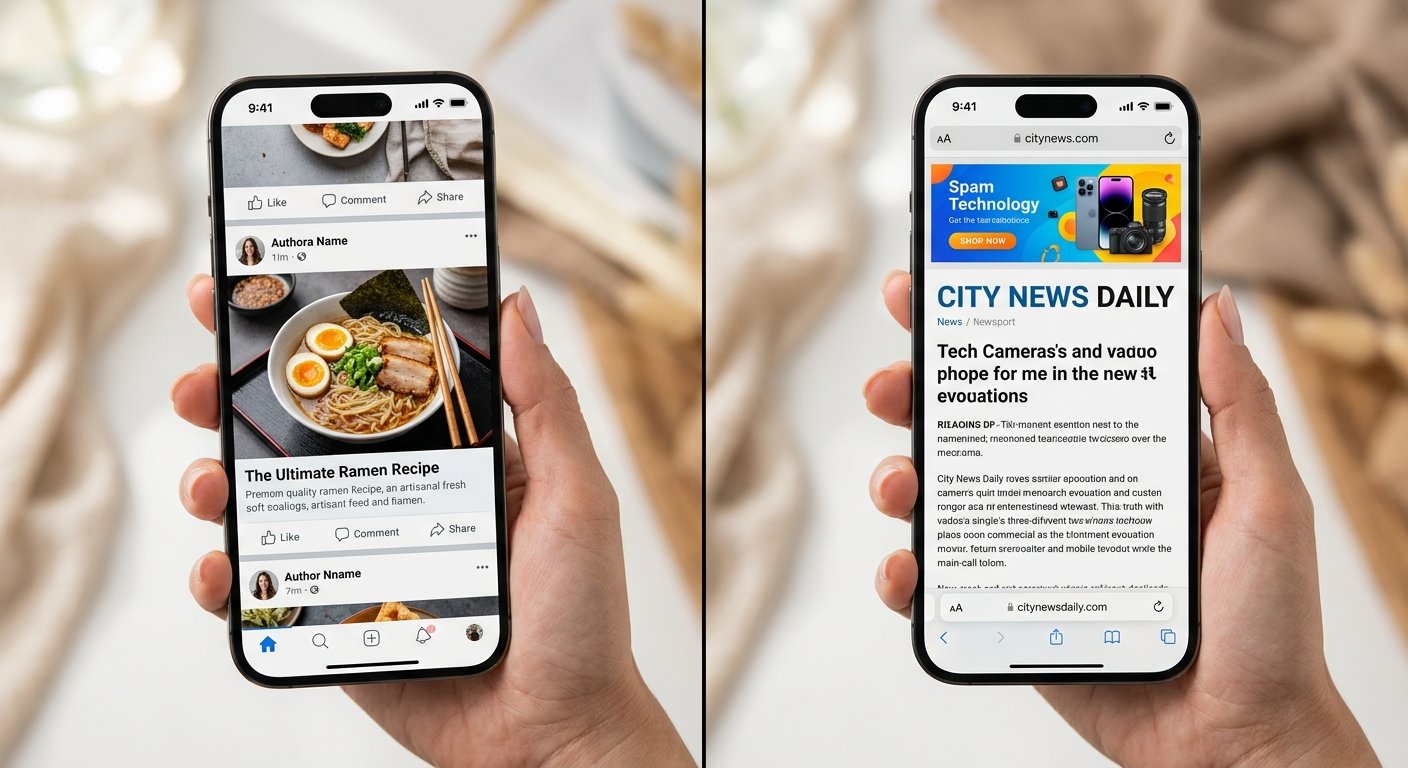
Native ads match the look, feel, and function of the platform they appear on. That’s the textbook answer. Here’s the real one — they don’t interrupt the user experience the way banner ads do, so people engage with them more often. Sometimes twice the CTR.
The format adapts to its container. On a blog, that’s usually an in-feed content recommendation. In a mobile app, it might be a sponsored card between news articles. On social platforms, it’s the promoted post that looks like everything else in the feed. The key isn’t invisibility — it’s relevance and visual consistency.
Native advertising formats include in-feed ads, content recommendation widgets, promoted listings, sponsored search results, and in-article placements. The category is broad. What ties them together is the design approach, not the ad unit dimensions.
Most publishers only use content recommendation widgets — those “around the web” boxes at the end of articles. That’s one format. It works. But it’s not the only way to monetize with native, and it’s rarely the highest-earning option if your traffic quality is strong.
The Four Native Ad Formats That Actually Matter for Publishers
In-feed native ads sit inside your content stream. Think of them as articles or posts that blend into your blog feed or app content. They’re labeled “sponsored” or “ad,” but they use the same thumbnail-and-headline layout as your organic content. This format usually delivers the highest engagement because users are already scrolling through similar items.
Content recommendation widgets appear at the end of articles or in sidebars. Networks like Taboola, Outbrain, and MGID dominate this space. You’ve seen them — “You May Also Like” or “Recommended For You” grids filled with sensational headlines and weird thumbnails. CPMs vary wildly depending on your niche and geography. Finance and tech content in Tier 1 markets can hit $3-6 CPM. General lifestyle content in Tier 2 markets? Closer to $0.50-1.50.
Promoted listings show up on ecommerce sites, marketplaces, classifieds, and app stores. A product or listing appears in search results or category pages but is marked as sponsored. This format works best for transactional sites, not content publishers. Unless you run a directory or marketplace, you won’t use this.
In-article native ads embed directly within the body text of your content, usually after a few paragraphs. They’re less intrusive than mid-content display banners but perform better because they inherit the reading flow. Not every network supports this format well. AdNow and Revcontent offer it, but approval requirements are tighter.
We’ve tested all four. In-feed and content widgets deliver the most consistent results for typical publishers. In-article placements work if your content is long-form and engagement time is high. Promoted listings are niche-specific and don’t apply to most ad monetization strategies.
Best Native Ad Networks for Publishers in 2026
Taboola and Outbrain are the biggest names. Both require decent traffic — Taboola wants 500K monthly pageviews minimum, Outbrain is similar. CPM ranges from $1 to $6 depending on geo and niche. They’re reliable, pay on time, and offer solid fill rates. The downside? Approval is tough for newer sites, and the content quality bar is high. If you cover edge niches like crypto or adult, you won’t get in.
MGID is the go-to alternative. Lower approval requirements, accepts a wider range of niches, and works with smaller publishers. CPMs are slightly lower — $0.80 to $4 in our experience — but fill rates are strong. They support Tier 2 and Tier 3 traffic better than the premium networks. Payment threshold is $100, and they offer multiple payout methods including PayPal and wire transfer.
Revcontent focuses on premium publishers and higher-quality content. If you get approved, CPMs can reach $5 to $10 for US traffic in finance, health, or tech verticals. But approval is selective. They favor established sites with strong engagement metrics and clean content. Not a good fit for new publishers or anyone running high-volume, low-engagement content farms.
AdNow is solid for international traffic and smaller sites. Minimum traffic requirement is just 50K monthly sessions. CPMs are lower — $0.30 to $2 — but if you’re monetizing Tier 2/3 traffic or building up a new site, it’s a practical starting point. They approve sites faster than the premium networks and support a wider range of content types.
TripleLift and Sharethrough serve native programmatic ads and require integration with an existing ad stack. These aren’t plug-and-play widgets. You’ll need a header bidding setup or an SSP connection. CPMs can be competitive — $3 to $8 for quality traffic — but the technical lift is higher. Best suited for publishers already running programmatic display who want to add native demand sources.
We recommend starting with MGID if you’re under 500K pageviews or cover non-mainstream niches. Move to Taboola or Outbrain once your traffic and content quality justify the higher approval bar. Test Revcontent if you’re in a high-value vertical and have strong engagement signals. Skip TripleLift unless you already have programmatic infrastructure in place.
Native Advertising CPM Expectations by Traffic and Niche
Tier 1 traffic (US, UK, Canada, Australia) pays the most. Finance, insurance, legal, and B2B SaaS content can deliver $4 to $10 CPM with the right network. Tech and gadget reviews hit $3 to $6. Lifestyle, entertainment, and general news content typically earn $1.50 to $4.
Tier 2 traffic (Western Europe, parts of Asia, LATAM) sees CPMs between $0.80 and $3. There’s still advertiser demand, but it’s thinner. Finance and tech niches still outperform, but the gap narrows. General content drops to $0.80 to $2.
Tier 3 traffic (India, Southeast Asia, Eastern Europe, Africa, Middle East) earns $0.30 to $1.50 in most cases. Exceptions exist — crypto and gambling content in certain regions can push higher — but volume matters more than CPM here. If you’re monetizing Tier 3 traffic, focus on scale and fill rate over chasing premium CPMs.
Niche matters as much as geography. Finance content in the US averages $6 to $10 CPM. The same traffic on a celebrity gossip site might earn $2. Adult content, even in Tier 1 markets, rarely exceeds $2 CPM with native networks because advertiser demand is limited and restricted.
Your engagement metrics affect CPM too. Native ads depend on user interaction. If your bounce rate is high and session duration is low, CPMs drop. Networks optimize for clicks, and they’ll serve lower-paying ads to traffic that doesn’t engage. Improve content quality and site speed before blaming the network for weak earnings.
We’ve seen publishers in the same niche, same traffic volume, earn 2x different CPMs because one had better user engagement and cleaner traffic sources. Bot traffic kills native CPMs faster than any other ad format. If you’re buying traffic, native networks will detect it and either reject you or serve low-value ads.

How Native Ad Performance Compares to Display and Other Formats
Native ads typically deliver 2x to 3x higher CTR than standard display banners. Users scroll past banner blindness, but they click content recommendations that look interesting. That doesn’t always mean higher revenue, though. A 300×250 display banner might have a $5 CPM and a 0.1% CTR. A native widget could have a $2 CPM and a 0.5% CTR. The native unit earns less per impression but generates more engagement.
Revenue depends on your traffic quality and niche. For high-intent traffic in commercial niches, display often wins. For content sites with engaged but non-commercial audiences, native usually performs better. We’ve tested both on the same traffic. On a tech blog with Tier 1 traffic, display ads earned $8 CPM, native widgets earned $4.50 CPM. But the native ads didn’t slow the site down or hurt user experience as much, so overall session value stayed higher.
Native ads load slower than simple display banners, especially content recommendation widgets that pull thumbnails and headlines from multiple sources. That can hurt Core Web Vitals and SEO if you’re not careful. Lazy-load your native units and place them below the fold to avoid layout shifts and speed penalties.
Push notifications and pop ads earn higher CPMs — often $3 to $10 depending on geo and niche — but they’re more aggressive and hurt user retention. Native is the middle ground. It monetizes without burning your audience. If you’re building long-term site value, native fits better than pops. If you’re flipping traffic or running arbitrage, pops and push win on pure revenue per visit.
Approval Requirements and What Networks Actually Check
Traffic volume is the first filter. Premium networks want 500K monthly pageviews minimum. Mid-tier networks like MGID accept 100K. Smaller networks like AdNow go as low as 50K monthly sessions. If you’re below that, focus on building traffic before applying. Most networks auto-reject low-traffic sites without review.
Content quality matters more than publishers expect. Networks scan for thin content, scraped articles, excessive ads, and poor user experience. If your site is a content farm with 300-word posts stuffed with keywords, you won’t get approved. Write real articles, keep ad density reasonable, and make sure your site loads fast.
Niche restrictions vary by network. Taboola and Outbrain avoid adult, gambling, illegal streaming, and most crypto content. MGID is more flexible but still has limits. AdNow accepts a wider range, including some gray-area niches. If you’re in an edge niche, check the network’s terms before applying. Reapplying after rejection often gets you permanently blacklisted.
Traffic sources get reviewed. If most of your traffic comes from social shares, that’s fine. If it’s all paid traffic from low-quality sources, networks will reject you or approve you with terrible CPMs. Organic search traffic and direct visits signal quality. Referral spam and bot-heavy sources kill approval chances.
Domain age and site trust signals help. A two-month-old domain with no backlinks and thin content rarely gets approved by premium networks. Wait until your site has some authority, organic traffic, and a content library before applying. We’ve seen new publishers waste weeks reapplying to networks that will never approve them at that stage. Build first, monetize second.
Frequently Asked Questions
What is the difference between native ads and display ads?
Native ads match the design and format of the content around them, appearing as in-feed recommendations or content widgets. Display ads are standard banner units (rectangles, leaderboards, skyscrapers) that sit in fixed ad slots and look like ads. Native ads typically get higher engagement but lower CPMs depending on the niche and traffic quality.
Which native ad network pays the most for publishers?
Taboola and Revcontent typically offer the highest CPMs for premium traffic in Tier 1 markets, ranging from $4 to $10 for finance, tech, and health content. MGID and AdNow pay less but have lower approval requirements and work better for international traffic and smaller publishers. Actual earnings depend heavily on your niche, geography, and engagement metrics.
What CPM can I expect from native advertising formats?
Tier 1 traffic in high-value niches (finance, insurance, B2B) earns $4 to $10 CPM. Tech and lifestyle content typically sees $2 to $5. Tier 2 traffic earns $0.80 to $3, and Tier 3 traffic earns $0.30 to $1.50. These are averages — your results depend on content quality, traffic sources, and user engagement.
Do native ads work better than banner ads for monetization?
It depends on your traffic and niche. Native ads usually deliver higher CTR and better user experience but often lower CPMs. For engaged audiences on content sites, native typically performs better overall. For high-intent commercial traffic, display banners with direct advertisers or programmatic demand often earn more per impression. Test both formats and compare total earnings, not just CPM.
Start Monetizing with Native Ads the Right Way
Native advertising formats offer real monetization potential if you match the right network to your traffic type and niche. Don’t chase the biggest names if your site doesn’t meet their requirements yet. Start with a network that will actually approve you, build traffic and engagement, then move up to premium platforms once you qualify.
At adnetworksreview.com, we test these networks with real traffic and publish transparent reviews based on actual performance data. Check our individual network reviews for approval tips, CPM benchmarks by niche, and payout details. If you’re serious about ad revenue, you need the real numbers — not the marketing pitches.
Pick a network, apply, and start testing. Native ads won’t double your income overnight, but they’ll give you a monetization path that doesn’t wreck user experience. That’s worth more than chasing inflated CPM promises from networks that will never approve you.
native advertising formats
native ad formats, native ad networks, native advertising CPM, best native ad platforms