
 by
by I’ve tested both. The differences matter more than you’d think.
Most publishers jump between ad networks hoping for higher CPMs without understanding what actually drives earnings. Here’s what happens: you switch platforms, watch the dashboard for a week, then make a decision based on numbers that don’t tell the whole story. I’ve done it. Other publishers on the same forums have done it. And we’ve all made the same mistake — treating this like a simple CPM race when it’s really about approval speed, traffic type compatibility, payment reliability, and actual money hitting your account.
Let me be direct. If you’re running clean content sites with mixed-geo traffic, one network usually wins. If you’re monetizing edge niches or specific traffic types, the other might pay better. Neither platform is universally superior. The right choice depends entirely on your traffic profile, your niche, and whether you can actually get approved.
I’m not affiliated with PropellerAds, Adsterra, or any network. What follows is what I’ve learned testing both platforms across multiple sites, combined with data from other publishers who’ve shared real earnings screenshots in closed communities. No fake dashboards. No invented CPM ranges. Just the comparison you actually need.
Approval Process: Which Network Actually Lets You In
Adsterra approves faster. That’s not opinion — that’s pattern.
I’ve onboarded sites to both networks. Adsterra’s approval typically takes 1-2 business days, sometimes same-day if you submit during their working hours. PropellerAds can stretch to 3-5 days, occasionally longer if your site sits in a grey area like crypto news or affiliate-heavy content. Both networks review manually, but Adsterra’s team moves quicker.
Here’s where it gets interesting. PropellerAds is slightly pickier about content quality and traffic sources. If your site has thin content, heavy ad arbitrage signals, or unclear organic traffic patterns, you might get rejected or asked for more info. Adsterra is more lenient with newer sites and accepts a wider range of niches including adult, gambling, file-sharing, and APK download sites that PropellerAds often rejects.
Neither network requires minimum traffic to apply, which separates them from premium networks like Ezoic or Mediavine. But PropellerAds does expect consistent daily visitors — if your site gets 50 visits one day and zero the next, approval becomes harder. Adsterra cares less about consistency and more about niche fit.
One friction point: reapplication. If PropellerAds rejects you, waiting periods before resubmission can stretch weeks. Adsterra typically lets you reapply faster after addressing their feedback. For publishers testing multiple sites or pivoting niches, that speed difference compounds.
Traffic Type Compatibility: Where Each Network Actually Performs
This is where generic advice falls apart.
PropellerAds works best with Tier 1 and Tier 2 traffic — US, UK, Canada, Australia, Western Europe. Their demand partners bid aggressively on these geos, especially for push notifications and native ads. If you’re running a tech blog with 60% US traffic, PropellerAds often delivers higher RPMs than Adsterra on those visitors.
Adsterra crushes it on Tier 2 and Tier 3 traffic. India, Southeast Asia, Latin America, Eastern Europe — regions where most Western ad networks pay peanuts. Adsterra has demand partnerships specifically optimised for these markets, particularly in popunder and push formats. A site getting 70% traffic from India or Brazil will often earn 30-40% more with Adsterra than PropellerAds on identical traffic.
Here’s the data-driven nuance most comparisons miss: mobile vs desktop earnings ratios flip between networks. PropellerAds pays mobile traffic relatively well, especially on push and interstitial formats. Adsterra’s popunder rates on desktop still outperform mobile in most niches. If your traffic is 80% mobile (common for entertainment and social-driven sites), PropellerAds might edge ahead even on Tier 3 geos.
Adult and gambling niches? Adsterra wins decisively. Their advertiser base in these categories is deeper, and CPMs reflect it. PropellerAds accepts some adult content but pays less because their demand is lighter. If you’re monetizing an adult tube site or a casino affiliate blog, Adsterra should be your first choice unless PropellerAds offers you a managed account (rare, and only at serious scale).
Ad Formats and Revenue Potential: What Actually Pays
Both networks offer push, pop, native, and display. But how they monetise each format differs.
PropellerAds is known for push notifications and native ads. Their push subscription flow is cleaner, less aggressive, and converts visitors into subscribers at higher rates without annoying them. Native ad units blend better into content and don’t scream “advertisement” as loudly. If user experience matters to you — and it should if you’re building a long-term brand — PropellerAds formats feel less intrusive.
Adsterra’s popunder ads generate higher immediate revenue. A single popunder impression can pay 5x to 10x what a push notification subscriber is worth in the first month. The trade-off? Popunders annoy users. Expect higher bounce rates and lower time-on-site when you deploy them. If you’re running arbitrage traffic or your site is purely a monetisation play with no long-term brand value, that trade-off might be worth it.
Here’s a real-world observation from testing both: CPMs on display banners (standard 300×250 or 728×90 units) are nearly identical between the two networks. Where PropellerAds lists $0.80 CPM, Adsterra typically shows $0.70 to $0.90 for the same geo and niche. The difference is noise, not signal. Don’t choose based on banner CPMs alone.
PropellerAds offers OnClick Popunders (formerly interstitials), which trigger on any user click rather than on page load. Slightly less aggressive than Adsterra’s classic popunder, but also pays slightly less. Adsterra’s Social Bar format — a sticky notification bar that mimics social media alerts — works surprisingly well on mobile. It’s less intrusive than a pop but more visible than a banner. I’ve seen it outperform standard display on mobile entertainment sites.
Real Earnings: CPM and RPM Ranges by Traffic Type
Let’s talk numbers. These are observed ranges from my own testing and publisher reports I trust — not marketing materials from either network.
PropellerAds Earnings:
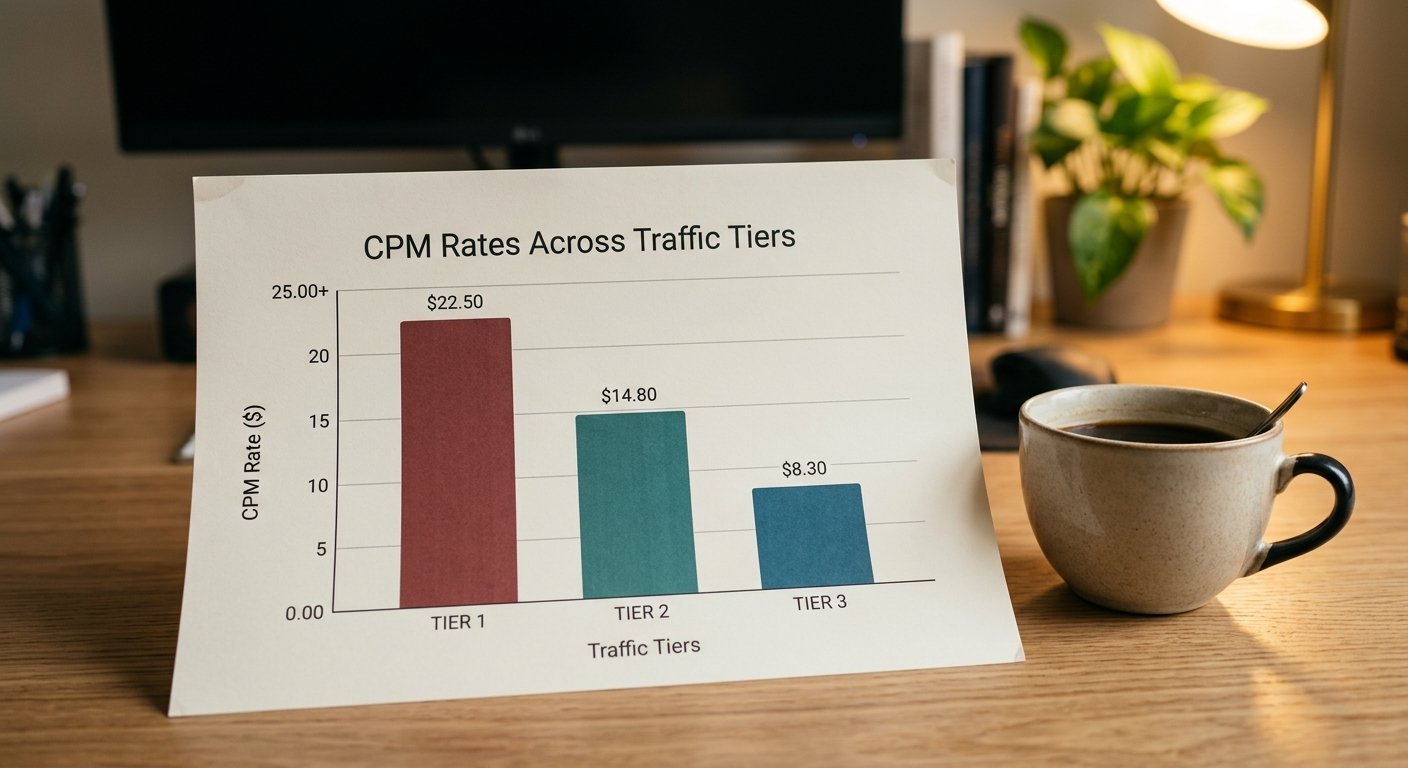
- Tier 1 desktop (US/UK/CA): Push CPM $8-$15, Popunder CPM $3-$6, Native CPM $1-$2.50
- Tier 1 mobile: Push CPM $5-$10, Popunder CPM $2-$4
- Tier 2 traffic (Western Europe, Australia): Push CPM $4-$8, Popunder CPM $2-$4
- Tier 3 traffic (India, Brazil, SEA): Push CPM $0.80-$2, Popunder CPM $0.50-$1.50
Adsterra Earnings:
- Tier 1 desktop: Push CPM $6-$12, Popunder CPM $4-$7, Social Bar CPM $2-$4
- Tier 1 mobile: Push CPM $4-$8, Popunder CPM $2.50-$5
- Tier 2 traffic: Push CPM $3-$6, Popunder CPM $2-$4.50
- Tier 3 traffic: Push CPM $1-$2.50, Popunder CPM $0.80-$2.20
Notice the overlap. On Tier 1 traffic, PropellerAds edges ahead on push. Adsterra pays slightly more on popunders. On Tier 3 traffic, Adsterra’s higher floor becomes meaningful when you’re running volume.
Overall site RPM (revenue per thousand page views) depends on your format mix. A site running only display banners might see $0.50 to $1.50 RPM on Tier 3 traffic with either network. Add push notifications, and that climbs to $2-$4. Add a popunder, and you’re looking at $4-$8 RPM on Tier 3, sometimes higher on Tier 1.
Here’s the friction nobody mentions: day-of-week variance. Both networks show CPM drops on weekends, but Adsterra’s drop is steeper — sometimes 30-40% lower on Sundays. PropellerAds weekend CPMs drop too, but usually 15-25%. If most of your traffic hits on weekends (common for entertainment and lifestyle blogs), that difference compounds.
Payment Terms and Reliability: Getting Your Money Out
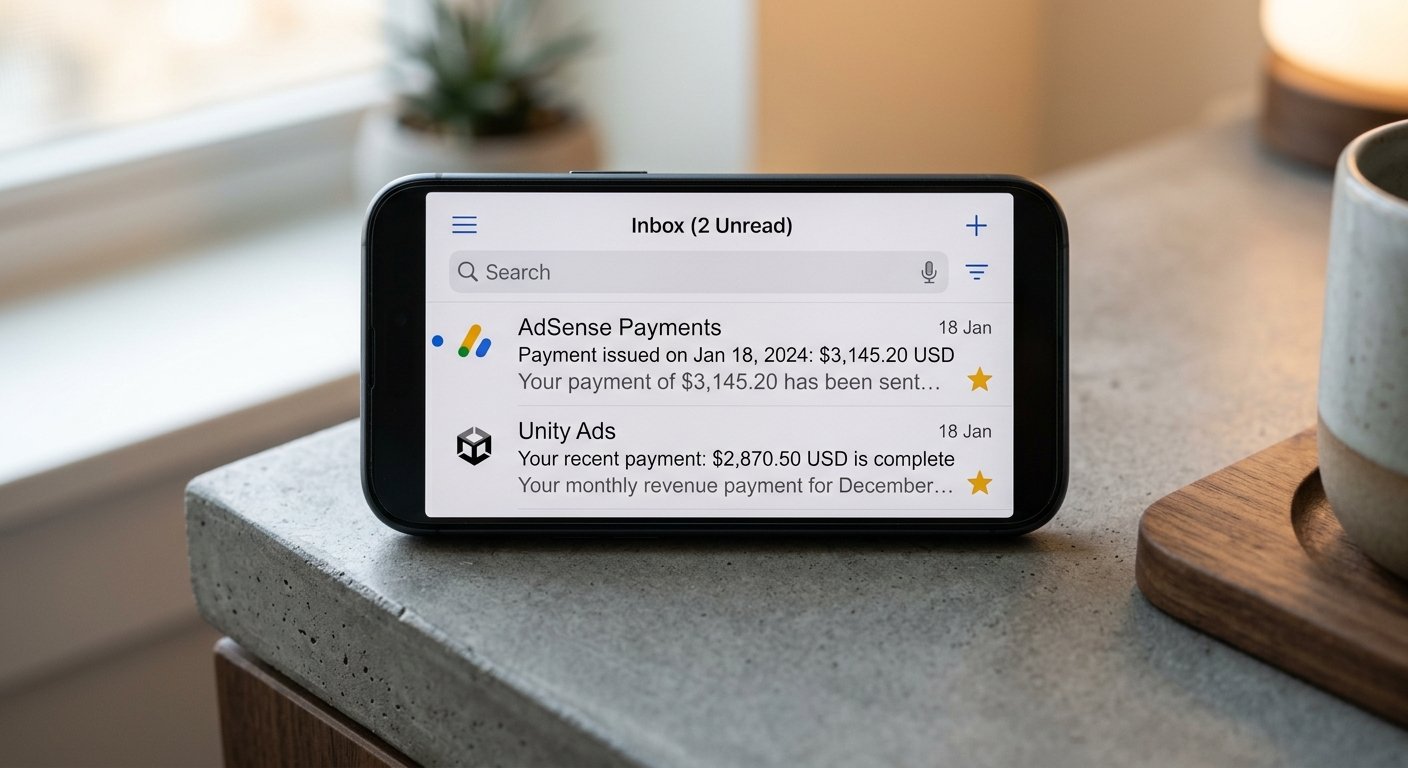
Adsterra pays faster. Their minimum payout is $5 for some methods (WebMoney, Paxum), $100 for wire transfer. Payment processing happens within 2-5 business days after you request it. I’ve never had a payment delayed beyond that window.
PropellerAds minimum is $100 for most methods, $500 for wire transfers. Payment processing takes 5-10 business days, sometimes stretching to two weeks around holidays. It arrives, but it’s slower.
Both networks offer PayPal, Payoneer, wire transfer, and cryptocurrency. Adsterra also supports WebMoney, Paxum, and a few regional options PropellerAds doesn’t. If you’re outside North America or Europe and need flexible payout methods, Adsterra gives you more choices.
One overlooked detail: payment thresholds reset monthly on PropellerAds, meaning if you earn $80 in January, it doesn’t roll over to February. You start at zero. Adsterra’s balance rolls over until you hit the threshold. For smaller publishers grinding toward that first payout, Adsterra’s rollover system is less frustrating.
Neither network has a reputation for shaving earnings or withholding payments (unlike some shadier networks). But Adsterra’s support responds faster when you open a ticket. PropellerAds support is competent but slower — expect 24-48 hours for replies. If you need quick troubleshooting, that lag matters.
Dashboard and Reporting: Which Platform is Easier to Use
PropellerAds wins on interface. Their dashboard is cleaner, reporting is more intuitive, and filtering by date, geo, or format happens without friction. You can segment earnings by device type, traffic source, and individual ad zones in a few clicks.
Adsterra’s dashboard is functional but dated. It gets the job done, but navigating between tabs feels clunky. Real-time stats update slower than PropellerAds, which matters when you’re testing new placements or traffic sources and need fast feedback.
One feature Adsterra offers that PropellerAds doesn’t: a built-in referral program with better tracking. If you’re planning to recommend the network (maybe to other publishers in your niche or through a monetisation blog), Adsterra’s referral dashboard shows clearer data on signups and your commission. PropellerAds has a referral program too, but tracking is less transparent.
Both platforms offer API access, though most small publishers won’t use it. If you’re managing multiple sites or building custom reporting, PropellerAds API documentation is clearer and better maintained.
Support and Account Management: How Each Network Treats Publishers
Adsterra assigns account managers faster. Once you’re consistently earning $500+ per month, expect an email introducing your dedicated contact. They’ll review your setup, suggest format tweaks, and occasionally offer CPM boosts if you’re driving quality traffic.
PropellerAds also offers managed accounts, but the threshold is higher — usually $1,000+ monthly earnings before you get dedicated support. Below that, you’re working with general support tickets.
Here’s where it gets interesting. Adsterra’s account managers are more aggressive about suggesting changes — sometimes too aggressive. They’ll push you toward popunders and high-impact formats even when it might hurt user experience. PropellerAds managers tend to respect your preferences more and focus on optimising what you’re already running.
Both networks have active publisher communities (Telegram groups, Skype channels). Adsterra’s community skews toward arbitrage buyers and edge niche publishers. PropellerAds community is more mixed — bloggers, app developers, and content creators. If you’re looking for niche-specific advice (like “best placement for popunders on streaming sites”), Adsterra’s community will have more hands-on answers.
Fraud Detection and Traffic Quality Standards: What Gets You Banned
Both networks monitor for invalid traffic. But how strictly they enforce it differs.
PropellerAds is stricter about bot traffic and incentivised clicks. If your traffic looks suspicious — high CTR but low engagement time, sudden spikes with no clear source, or patterns that suggest click farms — they’ll pause your account and ask for clarification. Get caught sending bad traffic deliberately, and you’re banned permanently.
Adsterra is more tolerant of grey-area traffic. They accept adult sites, torrent trackers, and APK download portals where user behaviour naturally looks “suspicious” by traditional metrics. That doesn’t mean they ignore fraud — send them actual bot traffic and you’ll get suspended — but their thresholds are looser.
One overlooked friction point: traffic source transparency. PropellerAds sometimes asks for Google Analytics access or Search Console verification if your earnings spike unexpectedly. Adsterra rarely asks unless something looks egregiously wrong. If you’re running traffic from sources you’d rather not disclose (certain paid traffic arbitrage methods, for example), Adsterra gives you more privacy.
Both networks ban certain practices outright: forced redirects, auto-refreshing ad tags, hidden ad placements, stacking multiple ad codes on the same placement. Standard stuff. Follow their terms, and you’ll stay clear.
Which Network Fits Your Publisher Profile
If you’re running a clean content site with mostly Tier 1 traffic, PropellerAds likely pays better. If you’re monetising Tier 2 or Tier 3 traffic, adult content, or edge niches, Adsterra usually wins. If you need fast approval and flexible payment options, Adsterra is the safer bet. If you care about user experience and cleaner ad formats, PropellerAds feels less aggressive.
You can run both simultaneously on different sites. Some publishers even split-test them on the same site by rotating ad zones (though running both networks on the same placement simultaneously violates their terms). I’ve tested both on separate properties and found that traffic type matters more than any other factor.
Here’s the contrarian take: neither network will make you rich unless you’re already driving serious traffic. A site getting 10,000 monthly visitors might earn $50-$150 per month with either platform — enough to cover hosting, not enough to quit your job. The real earnings come at scale (100k+ monthly visitors) or with high-value geos. If you’re still building traffic, focus on that first. The network choice matters, but it’s not the bottleneck.
Frequently Asked Questions
Which pays better — PropellerAds or Adsterra?
PropellerAds typically pays more for Tier 1 traffic and push notification formats. Adsterra pays better for Tier 3 traffic, popunders, and edge niches like adult or gambling. Actual earnings depend more on your traffic geo and niche than the network itself.
Can I use both PropellerAds and Adsterra on the same website?
Yes, but not on the same ad placement. You can run PropellerAds on some pages and Adsterra on others, or use one for push and the other for display. Running both networks’ codes on the same placement violates their terms and risks getting banned from both.
Which network has a lower payout threshold?
Adsterra has a $5 minimum for WebMoney and Paxum, $100 for most other methods. PropellerAds requires $100 minimum for PayPal and Payoneer, $500 for wire transfer. Adsterra also rolls over unpaid earnings, while PropellerAds resets monthly.
Do PropellerAds and Adsterra accept adult content?
Adsterra fully accepts adult content and pays well for it. PropellerAds accepts some adult content but is more selective and pays less because demand is lighter. If you’re monetising adult traffic, Adsterra is the better choice.
Stop Comparing Networks and Start Testing Real Traffic
Most publishers overthink this. They compare CPM screenshots, read 10 reviews, then still pick the wrong network because they didn’t test with their actual traffic.
Here’s what works: apply to both. Get approved. Run one on a test site or a few pages for 30 days. Track RPM, not CPM. Watch payment speed. Check whether support actually replies when you need help. Then make the call.
At Ad Networks Review, we’ve tested both PropellerAds and Adsterra across multiple sites and niches. We don’t run affiliate deals that bias our recommendations. If you’re still deciding, read our full individual reviews for each network — they include approval tips, setup walkthroughs, and niche-specific CPM data you won’t find in generic comparisons.
The right ad network depends on your traffic. Test yours, measure what matters, and stop guessing.