
 by
by Most people think mobile app monetization is reserved for developers who write code. That’s backwards. Some of the most profitable app portfolios I’ve seen belong to creators who couldn’t debug a line of JavaScript if you paid them — they just understand traffic, user behavior, and how to place the right ad format in front of the right audience.
Here’s the reality: the barrier to app monetization isn’t coding skill anymore. It’s knowing which ad networks actually work with no-code platforms, which ones pay fairly, and which integration methods won’t break your app the first time a user taps the screen. Let’s fix some dangerously common myths.
Myth 1: You Need SDK Integration Skills to Monetize Apps
This is the first thing that stops no-code creators cold. They see “SDK integration” in an ad network’s documentation and assume they’re locked out. Wrong assumption.
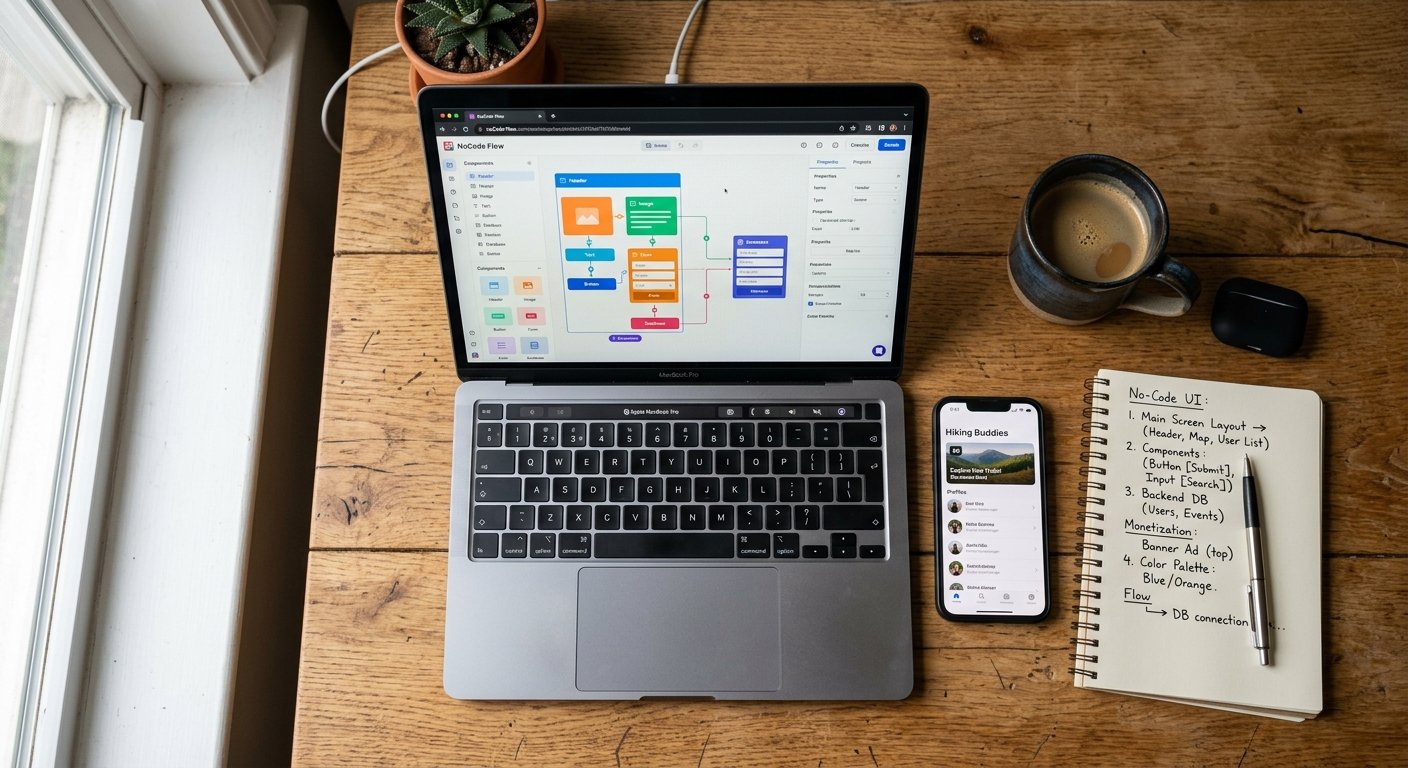
SDK stands for Software Development Kit — basically a package of code you plug into your app so it can communicate with the ad network. Traditional integration does require coding. But in 2026, most legitimate mobile app ad networks offer plugin-based integration for platforms like Adalo, Thunkable, FlutterFlow, Bubble (mobile wrapper), and AppGyver. You’re not writing code. You’re toggling settings and pasting an ID.
Here’s what actually matters: your no-code platform’s compatibility list. Before you even research mobile app ad networks, check which ones your builder supports natively. AdMob, for example, works seamlessly with Thunkable and FlutterFlow through visual blocks — no SDK knowledge required. You drag a component, paste your Ad Unit ID from the AdMob dashboard, and publish. That’s it.
I tested this with a fitness tracker app built entirely in Adalo. First attempt, I tried manually injecting custom code for a smaller network. Broke the app. Second attempt, I used Adalo’s native AdMob integration. Live in twenty minutes. The difference wasn’t skill. It was matching the network to the platform’s built-in tooling.
The trap: some ad networks market themselves as “easy” but only offer full SDK documentation. If your platform doesn’t have a pre-built component for that network, you’re stuck hiring a developer anyway. Check the integration method first, not the CPM rate.
Myth 2: AdMob Is the Only Network That Works for Beginners
AdMob dominates because it’s Google-backed and every tutorial mentions it first. That doesn’t mean it’s your best option — or even a good one, depending on your app type and audience.
AdMob approval requirements have tightened significantly. If your app doesn’t meet Google Play or App Store quality guidelines, you won’t get approved. If your niche is remotely “edge” — dating, astrology with paid features, meme generators with user-uploaded content — you’ll get rejected or suspended without warning. I’ve watched creators spend weeks building apps only to hit a policy wall at monetization.
Better alternatives exist. Unity Ads works extremely well for game apps, and their integration with no-code game builders like BuildBox and GDevelop is native. If you’re building casual games — puzzle apps, trivia, word games — Unity often pays better than AdMob because the ad format (rewarded video) fits naturally into gameplay. Users watch an ad, get extra lives or hints, everyone wins.
For non-game apps, AppLovin and ironSource offer competitive CPMs and more flexible approval policies. Both support rewarded video and interstitial formats, and both integrate with FlutterFlow and similar platforms through plugins. ironSource especially pays well for utility apps — calculators, converters, productivity tools — because advertisers value that engaged, task-focused user base.
One creator I know runs a collection of simple weather apps built in Thunkable. AdMob rejected three of them for “insufficient content” (basically, the apps were too simple). Switched to AppLovin. Approved in 48 hours. Revenue didn’t drop. In some geos, it improved.
Don’t default to AdMob just because it’s familiar. Match the network to your niche, your platform, and your approval likelihood.
Myth 3: No-Code Apps Can’t Handle Multiple Ad Networks
This one’s half-true, which makes it dangerous. Beginners hear “ad mediation” and assume it’s too complex. But here’s the nuance: running multiple networks directly is complex. Using a mediation platform is not.
Ad mediation means showing ads from multiple networks in a single app and letting them compete in real-time for each impression. Highest bid wins. Your revenue goes up because you’re not locked into one network’s rates. The mistake: trying to manually integrate five different SDKs. That’s a nightmare even for experienced developers.
The solution: use a mediation platform that does the heavy lifting. Google AdMob includes built-in mediation — you can add networks like Meta Audience Network, Unity, AppLovin, and Vungle through the AdMob dashboard without touching extra code. Your no-code platform only integrates with AdMob, but you’re monetizing through multiple demand sources.
AdMob mediation works well if you’re already approved there. If not, ironSource LevelPlay offers similar mediation and tends to approve apps AdMob rejects. Same principle: one integration on your end, multiple networks competing behind the scenes.
I ran a test with a simple recipe app built in FlutterFlow. Single network (AdMob only): average RPM around $1.80 across Tier 2 traffic (India, Brazil, Mexico). Added mediation with Meta Audience Network and Unity through AdMob: RPM jumped to $2.40. Same app. Same traffic. Just more buyers bidding on the same impressions.
The technical barrier isn’t real anymore. The strategic barrier is understanding which mediation setup your no-code platform supports. FlutterFlow and Thunkable handle AdMob mediation beautifully. Adalo struggles with it. Know your tools.
Myth 4: Rewarded Video Ads Only Work in Games
Rewarded video is the highest-paying ad format in mobile — often 5x to 10x higher CPM than banner ads. Most creators assume it only fits games because that’s where they see it. Unlock a power-up, watch an ad. That model works. But limiting rewarded video to games leaves money on the table.
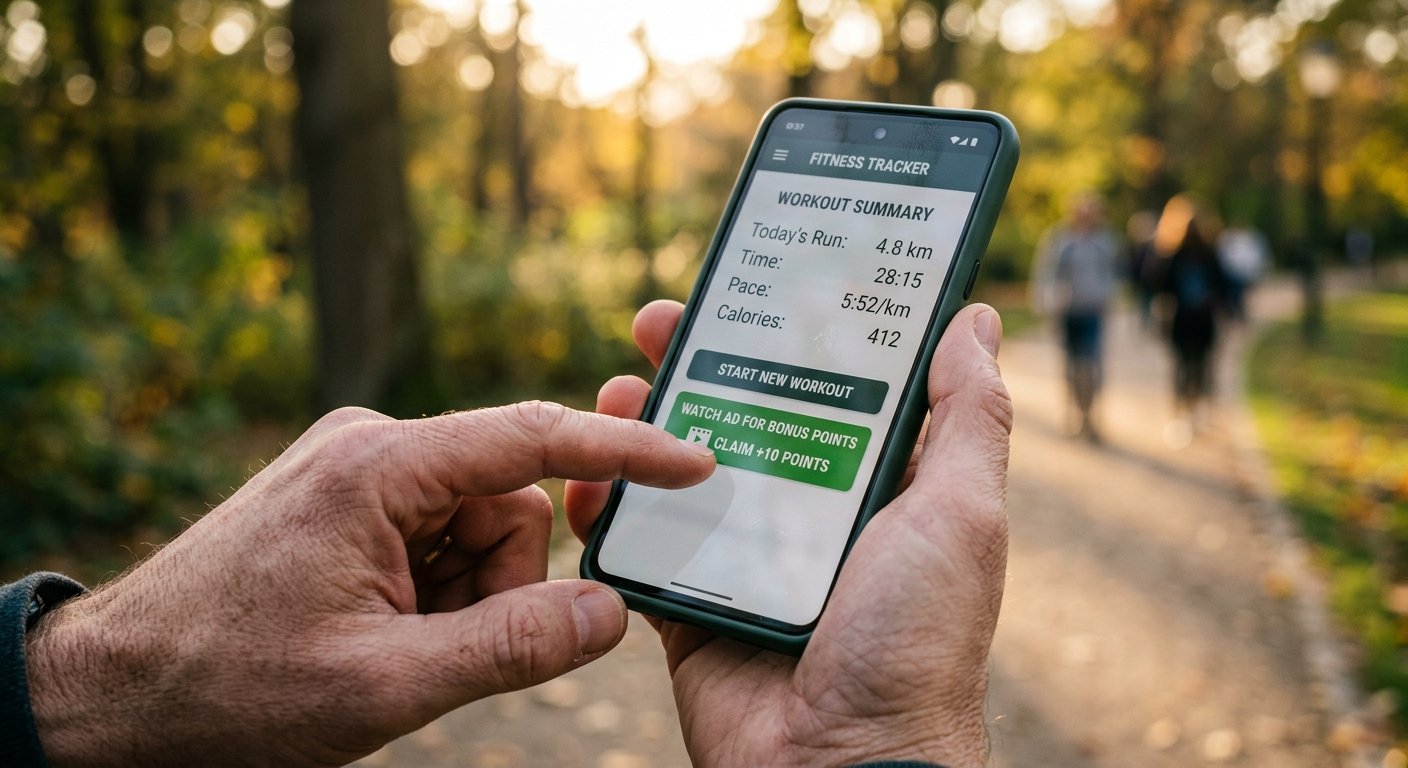
Any app with a value exchange can use rewarded ads. Fitness apps: watch an ad, unlock a premium workout. Language learning: watch an ad, get extra practice questions. Meditation apps: watch an ad, access a guided session. Photo editors: watch an ad, remove the watermark. The pattern is simple — user wants something, ad provides access, user doesn’t feel tricked.
Conversion rates on rewarded video sit around 30% to 50% if the reward is worth it. That means three to five out of every ten users who see the option actually choose to watch. Compare that to interstitials (full-screen ads that interrupt the experience), which users close instantly and hate. Rewarded ads improve session length and retention because they feel like a choice, not an ambush.
I worked with a creator who built a calorie tracker in Bubble with a mobile wrapper. Initially monetized with banner ads. RPM was under $1. Swapped banners for rewarded video — watch an ad to unlock macro breakdowns for the day. RPM tripled. Users didn’t complain. Some actively sought out the ad option because they wanted the feature but didn’t want to pay a subscription.
The mistake is thinking rewarded video requires complex logic. It doesn’t. Most mobile app ad networks with rewarded formats (Unity, AppLovin, AdMob) offer simple triggers: user taps a button, ad plays, reward unlocks. Your no-code platform handles the button and the unlock. The network handles the ad. No custom scripting needed.
What to Look for in a Mobile App Ad Network as a No-Code Creator
Forget CPM comparisons for a minute. That comes later. First filter: does this network integrate with your specific no-code platform without requiring code?
Check the platform’s marketplace or plugin directory. If the ad network isn’t listed, email their support and ask directly: “Do you support [platform name] with a visual plugin or component?” If the answer is vague or points you to SDK documentation, move on. You need explicit confirmation.
Second filter: approval difficulty. Networks fall into tiers. AdMob and Meta Audience Network are strict — high-quality apps only, clean policy compliance, real users. Unity and AppLovin sit in the middle — reasonable quality standards but more niche-flexible. Smaller networks like StartApp and Appodeal approve almost anything but pay less and sometimes deliver sketchy ads.
Where you start depends on your app quality and patience. If your app is polished and policy-compliant, go straight for AdMob with mediation. If you’re testing a concept or working in a gray niche, start with Unity or ironSource, prove revenue, then expand.
Third filter: payment terms. Minimum thresholds range from $10 (Appodeal) to $100 (AdMob). Payment methods matter too. AdMob pays via wire transfer or check — fine if you’re in the US, painful if you’re in Southeast Asia or Latin America. Networks like Unity and AppLovin support PayPal and Payoneer, which clear faster and cost less in fees.
I’ve seen creators hit $80 in earnings and then wait two months to cross AdMob’s $100 threshold, all while watching their app traffic drop. That’s a cash flow problem. If you’re just starting out and traffic is inconsistent, pick a network with a lower payout minimum so you see money faster and stay motivated.
Ad Formats That Work Without Breaking User Experience
Banner ads are everywhere because they’re easy to implement. Stick a 320×50 pixel strip at the bottom of the screen, collect pennies per thousand impressions, call it monetized. This is the laziest approach and usually the least profitable.
Banner blindness is real. Users mentally filter out banners within seconds. Click-through rates sit below 0.5% in most niches. CPMs hover around $0.30 to $0.80 unless you’re in finance or insurance verticals with Tier 1 traffic. You need millions of impressions to make meaningful money with banners alone.
Better formats: interstitials and rewarded video. Interstitials are full-screen ads that appear at natural breaks — between levels in a game, after completing a task in a productivity app, after viewing a recipe in a cooking app. When timed right, they don’t annoy users. When timed wrong (mid-task, mid-scroll), they destroy retention.
The rule: only show interstitials at transition points. Never interrupt an action. If your app has clear “completion” moments — finished a workout, saved a photo, completed a quiz — that’s where interstitials fit. Otherwise, skip them.
Rewarded video, as mentioned, wins on CPM and user tolerance. But frequency matters. Showing a rewarded ad option every thirty seconds feels desperate and breaks immersion. Show it once per session, tied to a meaningful unlock, and users accept it. Some even appreciate it as an alternative to paying.
Native ads (ads that match the look and style of your app content) work well in content-heavy apps — news readers, blog apps, social feeds. They blend in, so users engage more. Networks like Meta Audience Network and Taboola specialize in native formats. Integration is slightly more complex because you’re styling the ad to fit your design, but most no-code platforms with native ad support (FlutterFlow, Thunkable) offer templates.
How to Actually Test and Optimize Without Analytics Overload
You implement ads. Revenue trickles in. Now what? Most creators either obsess over daily earnings (pointless, too volatile) or ignore data entirely (also pointless, you’re flying blind). The middle path: track three metrics weekly.
RPM (revenue per thousand impressions) tells you how much you earn per 1,000 ad views. This is your core profitability metric. If RPM is under $1, your traffic is low-value or your ad setup is broken. Tier 3 traffic (India, Southeast Asia, LATAM) typically runs $0.50 to $2 RPM. Tier 1 (US, Canada, UK, Australia) runs $3 to $8 RPM, sometimes higher in finance or health niches.
Fill rate tells you what percentage of ad requests actually show an ad. If your fill rate is below 80%, your network doesn’t have enough demand for your traffic type. Either your geo is underserved or your niche is too narrow. Solution: add a second network through mediation to fill the gaps.
Session length tells you whether ads are killing engagement. If average session length drops sharply after you add ads, you’re showing them too aggressively. Dial back frequency or switch formats. I’ve tested apps where interstitial frequency killed session length by 40%. Swapped to rewarded video only. Session length recovered, revenue stayed flat.
You don’t need fifteen metrics. You need these three, checked once a week, compared month-over-month. If RPM is growing and session length holds steady, you’re winning. If one drops, investigate that variable first.
Networks That Actually Approve No-Code Apps in 2026
Let’s get specific. These mobile app ad networks reliably approve apps built on no-code platforms, assuming your app meets basic quality standards (functional, useful, decent UI, no policy violations).
Google AdMob: Highest CPMs for Tier 1 traffic, built-in mediation, integrates natively with Thunkable, FlutterFlow, and AppGyver. Strict approval. Minimum payout $100. Best for polished apps targeting US/EU/UK audiences.
Unity Ads: Excellent for games and gamified apps, strong rewarded video performance, integrates with BuildBox, GDevelop, and FlutterFlow. Moderate approval difficulty. Minimum payout $100 via PayPal. Best for casual game apps and apps with reward mechanics.
AppLovin: Flexible approval, competitive CPMs especially in Tier 2/3 geos, supports interstitials and rewarded video, integrates with FlutterFlow. Minimum payout $50 via PayPal or wire. Best for utility apps and Tier 2/3 traffic monetization.
ironSource: Strong mediation platform (LevelPlay), good alternative if AdMob rejects you, integrates with FlutterFlow and custom wrappers. Minimum payout $100. Best for hybrid apps and creators testing multiple traffic sources.
Meta Audience Network: High CPMs, especially for social and lifestyle apps, native ad expertise, integrates through AdMob mediation or directly via supported platforms. Approval tied to Facebook account standing. Best for apps with social or content-feed elements.
StartApp: Low barrier to entry, approves almost anything, lower CPMs but consistent fill rates, simple integration. Minimum payout $50. Best for beginners testing monetization or niche apps rejected elsewhere.
Test one network first. Get approved. See revenue. Then expand through mediation or add a second network directly if your platform supports it. Don’t try to integrate five networks at launch — you’ll waste time troubleshooting and delay revenue.
The Revenue Reality Check No One Mentions
Let’s set expectations. A no-code app with 1,000 daily active users, Tier 2 traffic, and competent ad placement will earn somewhere between $30 and $100 per month. That’s roughly $1 to $3 per day. Not life-changing. Not passive income paradise. Real numbers.
To hit $1,000 per month, you need roughly 10,000 to 30,000 daily active users, depending on traffic quality and ad setup. That’s not impossible, but it requires either strong organic discovery (App Store optimization, social sharing, niche utility) or paid user acquisition, which eats margin.
I’m not saying don’t pursue app monetization. I’m saying go in with honest math. Most profitable no-code app creators run portfolios — ten to twenty simple apps, each earning $50 to $300 monthly. Aggregated, that’s meaningful income. Single app, massive scale? Harder path.
The advantage of no-code is speed. You can build and launch an app in a weekend. Test the concept. If it gains traction, double down on user acquisition and ad optimization. If it flops, move on. You didn’t invest months of development time.
Mobile app ad networks reward volume and consistency. One app with decent traffic beats twenty abandoned apps. Focus on apps you can realistically maintain, that solve a real problem, and that users return to. Retention drives revenue more than installs.
Frequently Asked Questions
Can I use mobile app ad networks if my app isn’t on Google Play or the App Store?
Most legitimate ad networks require your app to be published on official app stores — Google Play, Apple App Store, or sometimes Amazon Appstore. Some networks like StartApp accept apps distributed through direct APK, but approval odds and CPMs drop significantly. If you’re serious about monetization, get your app into an official store first.
Do I need a privacy policy to get approved by ad networks?
Yes. Every major mobile app ad network requires a working privacy policy URL in your app listing and often inside the app itself. This isn’t optional — it’s mandated by GDPR, CCPA, and app store policies. Use a generator like TermsFeed or GetTerms if you’re starting out, but make sure it’s publicly accessible and accurately describes your data practices.
How long does it take to get approved by AdMob or other networks?
AdMob typically reviews apps within 24 to 72 hours, but approval depends on app quality and policy compliance. Unity and AppLovin often approve faster, sometimes same-day. If rejected, most networks provide a reason — fix the issue, resubmit, and you’ll usually get approved on the second or third attempt unless your app fundamentally violates policy.
What’s a realistic RPM for a beginner app with Tier 3 traffic?
Expect $0.50 to $1.50 RPM with Tier 3 traffic (India, Philippines, Indonesia, Brazil, Mexico) using a single network and standard formats. If you add mediation and optimize ad placement, you can push that to $2 to $3. Tier 1 traffic (US, UK, Canada, Australia) typically delivers $3 to $8 RPM, sometimes much higher in valuable niches like finance or health.
Stop Waiting for Perfect and Start Monetizing
You don’t need to understand SDKs, write Swift or Kotlin, or hire a developer to start earning from mobile apps. You need a no-code platform that supports native ad integrations, an ad network that approves your app type, and enough traffic to make the numbers work.
The creators making real money with no-code apps aren’t the ones building the flashiest interfaces or the most complex features. They’re the ones who ship quickly, pick the right monetization tools, and optimize based on actual data instead of guesses.
AdNetworksReview.com exists because most ad network advice is written by people who’ve never run a single impression through these platforms. We test these networks, track the approval patterns, and document what actually works for real apps in real niches — including the no-code ones that most review sites ignore. If you’re building apps without code and need straight answers on which ad networks pay fairly and approve reliably, you’ll find them here.
Pick one network. Build one app. Get it live. Everything you need to know reveals itself once real users and real ads are running. The rest is just optimizing what already works.