

 by
by A publisher messaged me last month. Twenty-three days into running Propeller Ads on a 15K-per-month blog about budget travel. Earnings sat at $8.47. The $100 threshold looked impossibly far. “Should I just quit?” he asked.
Here’s what most beginners don’t realise — the barrier isn’t always traffic volume or CPM rates. It’s the withdrawal minimum. If you’re building from scratch with modest traffic, waiting three or four months to hit $100 kills momentum faster than anything else. You can’t test what works. You can’t validate your setup. You’re flying blind until that first payout clears.
That’s why ad networks with minimum payout thresholds around $10 matter so much. They let you get paid faster, test more aggressively, and iterate your monetization strategy while the feedback loop is still fresh. I’ve tested dozens of networks across different niches and traffic volumes. The ones I’m covering here all allow payouts at $10 or close to it — some go as low as $1 if you choose the right payment method.
Not every $10-threshold network is worth running. Some pay fast but deliver terrible CPMs. Others approve everyone but delay payments for weeks with vague “review” excuses. A few are outright scams. I’ll walk through the ones that actually work, based on real testing and publisher feedback from multiple campaigns across tech, lifestyle, and edge niches.
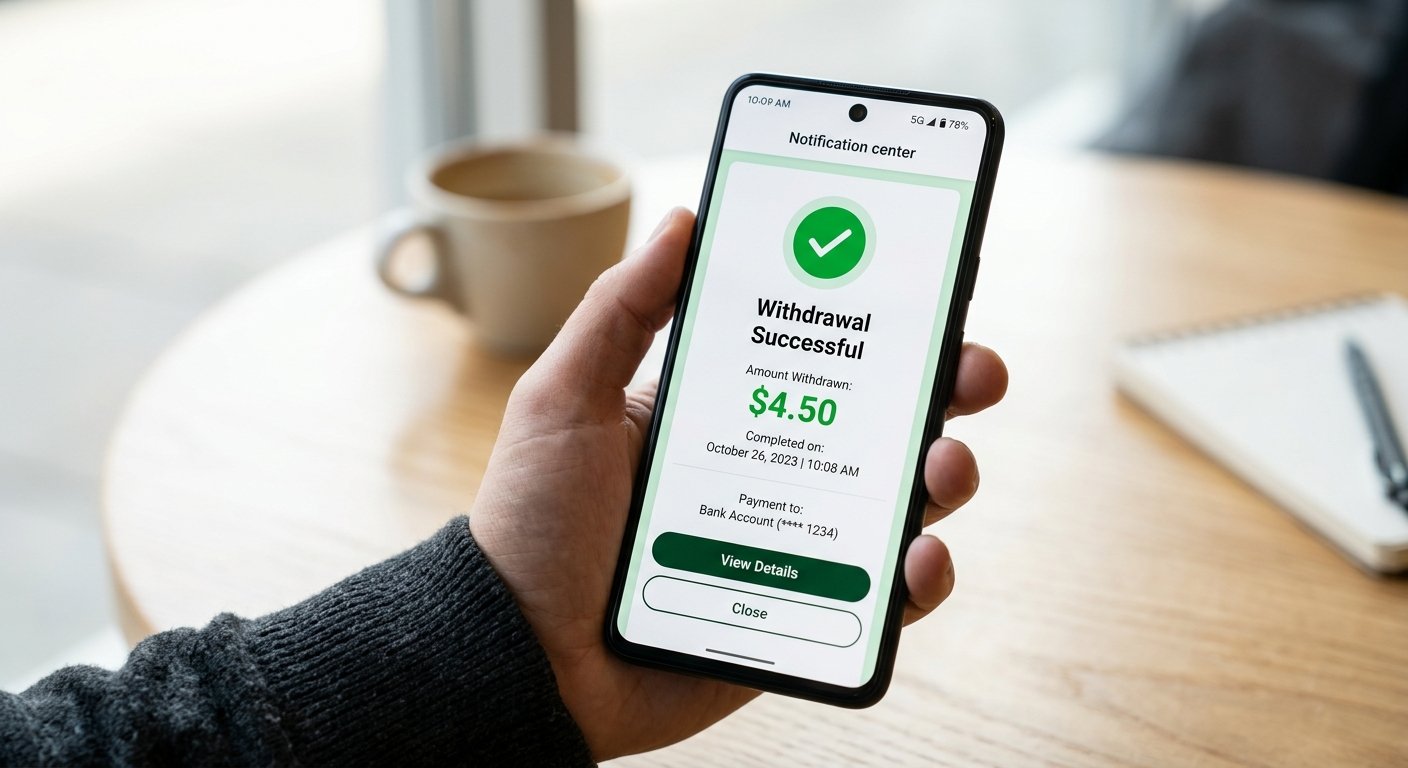
Why the Minimum Payout Threshold Actually Matters
Most premium networks — Google AdSense included — set their minimum at $100. Some push it higher. Media.net makes you wait until you hit $100 before you can even request payment. Ezoic and Mediavine don’t let you in without significant traffic, but once you’re approved, you’re still waiting on that $100 mark.
That’s fine if you’re already doing 50K pageviews a month. But if you’re starting out with 5K or 10K monthly visits, hitting $100 can take two, three, even four months depending on your niche and traffic quality. That’s a long time to wait for validation that your setup works, your placements don’t kill user experience, and your audience actually converts.
Lower thresholds change the feedback cycle. You test a network for two weeks. You hit $10 or $20. You withdraw. You know immediately whether the CPMs they promised match reality, whether payments actually arrive on schedule, and whether their dashboard numbers are honest or inflated. If something’s off, you pivot fast. That speed matters more than most publishers realise when they’re still figuring out what works.
There’s a cash flow angle too. If you’re running paid traffic — arbitrage, SEO-boosted content with promotion spend, anything where you’re fronting costs — waiting 90 days for your first $100 while ad spend piles up is a terrible position. You need shorter cycles. Lower thresholds give you that.
The tradeoff? Networks with low payout minimums often serve lower-tier advertisers, which can mean lower CPMs. Not always, but often. You’re trading some revenue potential for speed and flexibility. For beginners or those testing new niches, that trade usually makes sense.
PropellerAds — $5 Minimum, Popunders and Push
PropellerAds drops the minimum payout to $5 if you withdraw via ePayments or Payoneer. Wire transfers and some other methods require $100, but the $5 option exists and works. I’ve tested it across three different sites — a tech blog, a streaming APK niche site, and a general entertainment portal.
Approval is easy. They accept almost any niche, including adult, gambling, crypto, and streaming content that most mainstream networks reject outright. Traffic quality matters less here than it does with premium networks. You can get in with a few thousand monthly visits as long as your site isn’t pure spam.
Their strength is popunder and push notification ads. Display banners exist but pay poorly compared to pops. If your audience tolerates popunders — and in some niches like APKs, streaming, or gaming, they do — PropellerAds delivers solid CPMs for Tier 2 and Tier 3 traffic. I saw $1.80 to $3.20 CPM for Indian traffic on the APK site, which isn’t spectacular but decent given the niche and geo.
Push notification ads can work if you’ve got an engaged audience willing to subscribe. Once someone opts in, PropellerAds serves push ads even when they’re not on your site. Revenue per subscriber varies wildly by niche. Tech and finance niches convert better than entertainment. I earned roughly $0.02 to $0.08 per subscriber per month in a finance-adjacent campaign. That adds up if you build a decent subscriber base.
The dashboard is straightforward. Real-time stats, no major delays. Payment arrives within 2 to 5 business days for Payoneer, slightly longer for ePayments. I never had a payment delayed or questioned, which matters when you’re comparing networks that promise fast payouts but ghost you at withdrawal time.
The downside? Popunders annoy users. If you’re trying to build a loyal readership or a premium brand, aggressive pops can hurt retention. Use them carefully. Test frequency caps. Don’t hammer every visitor with three pops per session.
Adsterra — $5 via Several Payment Methods
Adsterra sets the minimum at $5 for most payment options — WebMoney, Paxum, and a few others. PayPal and wire transfers require $100, so check your preferred method before assuming you can withdraw at $5.
They accept a wide range of niches. Adult content, gambling, file-sharing, cryptocurrency, VPNs, browser extensions — all allowed. That flexibility makes Adsterra a go-to for publishers in edge niches who can’t get approved anywhere else. I ran them on a crypto news site and a torrent-adjacent blog. Both got approved within 24 hours.
Ad formats include display banners, popunders, direct links, and social bar ads. Popunders perform best for most niches, just like PropellerAds. Social bar ads — sticky banners at the top or bottom of the page — can work if you design them to match your site’s look, but they often feel intrusive if styled poorly.
CPM rates vary by geo and niche. Tier 1 traffic (US, UK, Canada, Australia) pays significantly better than Tier 2 or 3. I saw $4 to $7 CPM for US traffic on popunders in the crypto niche, which is decent. Indian and Southeast Asian traffic dropped to $1 to $2.50 CPM. Not amazing, but workable if your traffic volume is high enough.
Adsterra’s anti-adblock technology is aggressive. It detects most adblockers and either serves alternative ad formats or prompts users to disable the blocker. That boosts fill rates compared to networks that simply don’t serve ads to blocked users. Whether that’s a feature or an annoyance depends on your audience and how you feel about pushing past adblock software.
Payments arrive on time. I tested three withdrawals via Paxum. All cleared within 3 to 7 business days. No mysterious holds or requests for extra documentation. The $5 threshold makes it easy to test the network for a week or two, see real money hit your account, and decide whether to keep running it.
Revive AdServer (Self-Hosted) — You Set Your Own Rules
Revive AdServer isn’t a network. It’s open-source ad management software you install on your own server. You sell ad space directly to advertisers, serve the ads via your own infrastructure, and set your own payout terms. There’s no minimum threshold because you’re not withdrawing from a third-party network — you’re collecting payments directly.
This option works if you’ve got advertisers willing to buy directly from you, or if you’re running your own campaigns and need a way to manage and rotate ad creatives across multiple sites. I used Revive for a client running a small network of niche blogs in the home improvement space. We sold banner placements directly to local contractors and service providers. No network split. No threshold waiting period. Payment terms were whatever we negotiated — usually net 30.
Setup requires some technical skill. You need hosting, ideally a VPS or dedicated server if you’re serving a lot of impressions. The software is free, but you’ll spend time configuring zones, tracking, and integrations. If you’re comfortable with cPanel and basic Linux commands, it’s manageable. If not, expect a learning curve or hire someone to set it up.
The upside is complete control. You keep 100 percent of ad revenue. You decide which ads run, how often, and where. You’re not subject to arbitrary policy changes or sudden account suspensions. The downside is you need to find your own advertisers, which is harder than it sounds unless you’re in a niche where local or direct-buy demand exists.
Revive works best for publishers with a specific audience advertisers want to reach — local service businesses, B2B SaaS, niche hobbies, professional verticals. If you’re running a general entertainment blog, finding direct advertisers is tough. Stick with ad networks for that.
PopCash — $10 Minimum via PayPal, Paxum, Wire
PopCash specialises in popunder ads. That’s it. No display banners. No native ads. Just pops. The minimum payout is $10 for PayPal, Paxum, and WebMoney. Wire transfers require $50.
They’ve been around since 2012, which matters in an industry where networks disappear overnight. I tested PopCash on a movie streaming site and a gaming tips blog. Both got approved instantly. They don’t have strict content policies — adult, gambling, file-sharing, and streaming sites all qualify as long as the traffic is legitimate.
CPM rates are lower than most networks. I averaged $0.80 to $1.50 for Tier 2 traffic and $2 to $4 for Tier 1. That’s on the low side compared to PropellerAds or Adsterra, but the $10 threshold and fast payments make it a decent option for testing or supplemental revenue.
PopCash uses a bidding system. Advertisers bid on impressions in real time, and the highest bid wins. This means CPMs fluctuate constantly. Some days you’ll see $3 CPM. Other days it drops to $1.20 for the same traffic source. That inconsistency makes revenue forecasting difficult, but it also means you occasionally catch high bids that boost your average.
Payments are reliable. I withdrew via PayPal three times. All cleared within 2 to 4 business days. No surprise deductions or fees beyond PayPal’s standard cut. The $10 minimum lets you test the network for a week, hit the threshold, withdraw, and evaluate whether the CPMs justify continuing.
The weakness is ad quality. Popunder ads from PopCash often promote sketchy offers — browser extensions, fake antivirus software, misleading download buttons. If you’re running a site where trust matters, these ads can damage your reputation. Use them on entertainment, streaming, or gaming sites where users expect and tolerate aggressive monetization, not on professional or educational content.
RichAds — $100 Standard, but $50 First Withdrawal
RichAds technically requires a $100 minimum, but they drop it to $50 for your first withdrawal. That’s not as low as the others here, but it’s worth mentioning because their CPMs are noticeably higher for push and popunder traffic.
I ran RichAds on a finance tips blog and a tech news site. Approval took about 24 hours. They’re more selective than PropellerAds or Adsterra — your site needs decent content, clean design, and legitimate traffic. They reject low-quality scraper sites and spam blogs outright.
Push notification ads pay well if your niche is right. Finance, crypto, e-commerce, tech gadgets, and health supplements all convert strongly. I earned $0.10 to $0.25 per subscriber per month on the finance blog, which is double what I saw with PropellerAds in a similar niche. The catch is you need subscribers. Building a push notification list takes time, especially with stricter browser permissions in Chrome and Safari.
Popunders also perform better than most networks. I saw $5 to $8 CPM for US traffic, $2 to $4 for European traffic. That’s competitive with premium networks, which is unusual for a low-barrier ad platform.
RichAds pays weekly, which speeds up cash flow compared to monthly payout networks. The $50 first withdrawal helps you test the platform and confirm the CPMs hold up in real campaigns before committing fully. After the first payout, you’re back to the $100 minimum, but by then you’ll know whether the network fits your site.
The platform also offers tools for advertisers buying traffic, so if you’re doing media buying in addition to publishing, you can use the same dashboard for both. That’s a niche advantage most publishers won’t care about, but it’s there.
Hilltopads — $20 Minimum, Adult and Mainstream
Hilltopads sets the bar at $20, paid weekly via Paxum, Wire, Bitcoin, or WebMoney. They accept both adult and mainstream content, which makes them one of the few networks that lets you monetize across both categories without needing separate accounts.
I tested Hilltopads on an adult niche site and a gaming blog. Both got approved within a few hours. Setup is simple — paste a code snippet, choose your ad formats, and you’re live. They offer popunders, banners, direct links, and video pre-roll ads.
CPMs depend heavily on niche. Adult content earns better than mainstream in most cases. I saw $3 to $6 CPM for adult traffic from Tier 2 countries, $6 to $12 for Tier 1. Mainstream gaming content earned $1.50 to $3 CPM for Tier 2, $3 to $6 for Tier 1. Those gaps are normal across networks, but worth noting if you’re deciding where to focus.
Hilltopads pays on time. I withdrew three times via Bitcoin. Payments cleared within 24 to 48 hours after approval. The $20 minimum is low enough that even small sites can hit it in a week or two, depending on traffic volume.
One quirk — their dashboard is less polished than most networks. Stats update slowly, sometimes with a 12-hour delay. It’s not a dealbreaker, but if you’re used to real-time reporting from PropellerAds or Adsterra, Hilltopads will feel sluggish. The revenue data is accurate once it updates, but the lag makes day-to-day optimization harder.
ExoClick — $20 Minimum, Adult and Mainstream
ExoClick is one of the largest networks in the adult advertising space, but they also support mainstream content. Minimum payout is $20 via Paxum, Wire, or Payoneer. They’ve been operating since 2006, which gives them credibility in an industry where scam networks appear regularly.
Approval is straightforward for both adult and mainstream sites. I ran ExoClick on an adult dating review site and a tech download portal. Both accounts went live within 24 hours. They don’t have strict traffic requirements — even small sites get approved as long as the content isn’t scraping or spam.
Ad formats include display banners, popunders, native ads, video ads, and push notifications. Their targeting options are more granular than most networks. You can filter by device, browser, OS, geo, and even connection type. That level of control is unusual for a low-threshold network.
CPMs are solid. Adult content earns $4 to $10 CPM for Tier 1 traffic, $2 to $5 for Tier 2. Mainstream content earns less — around $2 to $5 for Tier 1, $1 to $3 for Tier 2. Popunders perform best, followed by video ads if your layout supports them without wrecking user experience.
ExoClick pays weekly, which is faster than most networks. The $20 threshold is low enough for quick testing. I withdrew twice via Payoneer. Both payments arrived within 3 to 5 business days. No delays, no surprise fees beyond Payoneer’s standard cut.
The platform also caters to advertisers buying traffic, so the dashboard includes features publishers don’t need. That clutters the interface slightly, but once you know where your publisher stats live, it’s manageable.

A-Ads — $1 Minimum via Bitcoin
A-Ads is a Bitcoin-only ad network. No fiat payouts. Minimum withdrawal is $1 worth of Bitcoin, paid directly to your wallet address. If you’re comfortable with crypto, A-Ads offers the lowest threshold of any network I’ve tested.
They accept mainstream and adult content. Approval is instant — paste the ad code and you’re live. No application process. No traffic minimums. No content review. That openness attracts low-quality publishers, which drags down advertiser demand and CPM rates, but it also means you can start earning immediately.
CPM rates are low. I averaged $0.20 to $0.80 for Tier 2 traffic, $0.50 to $1.50 for Tier 1. That’s well below PropellerAds or Adsterra, but the $1 threshold and instant approval make A-Ads useful for testing monetization on brand-new sites before applying to higher-paying networks.
A-Ads pays daily. Once your balance hits $1, you can withdraw to your Bitcoin wallet. Transactions usually confirm within an hour, though blockchain congestion occasionally delays it. The instant payout cycle is the network’s biggest advantage — you see money flow almost in real time.
The downside is ad quality. Many advertisers on A-Ads promote crypto-related offers, blockchain projects, and other niche products. Some are legitimate. Others are borderline scams. If you’re running a professional or educational site, these ads can hurt your credibility. Use A-Ads on entertainment, tech, or crypto-focused content where the audience expects and tolerates crypto advertising.
BidVertiser — $10 via PayPal
BidVertiser has been around since 2003. They serve display banners, popunders, push notifications, and native ads. Minimum payout is $10 for PayPal, $50 for wire transfer and check.
Approval isn’t difficult. They accept most mainstream content but reject adult, gambling, and piracy-related sites. I tested BidVertiser on a lifestyle blog and a recipe site. Both got approved within 48 hours.
CPM rates are below average. I saw $0.50 to $1.20 for Tier 2 traffic, $1.50 to $3 for Tier 1. That’s on the low end compared to most networks, but the $10 PayPal threshold makes it viable for small publishers who need fast payouts.
BidVertiser’s dashboard feels dated. The interface looks like it hasn’t been updated in a decade. Stats are accurate but slow to load. Reporting options are limited compared to modern networks like PropellerAds or Adsterra. It’s functional, just clunky.
Payments are reliable. I withdrew via PayPal twice. Both cleared within 2 to 3 business days. The $10 minimum is low enough that even modest traffic hits the threshold within a week or two.
The main reason to consider BidVertiser is if you’re running mainstream content that doesn’t qualify for networks like Adsterra or PropellerAds, and you need a low threshold PayPal option. Otherwise, better CPMs exist elsewhere.
Media.net — $100 Minimum, but Worth Mentioning
Media.net isn’t a $10 threshold network. Their minimum is $100 via PayPal or wire. I’m including them because they’re the best alternative to AdSense for publishers who need contextual ads and can wait a bit longer for payout.
Approval is selective. Media.net wants quality content, decent traffic (usually 10K monthly minimum, though they don’t publish an official number), and English-language sites targeting US, UK, or Canadian audiences. I tested them on a tech blog with 25K monthly visits. Approval took three days.
CPM rates are significantly higher than low-threshold networks. I averaged $5 to $12 for US traffic, depending on the niche and ad placement. That’s competitive with AdSense and higher than PropellerAds or Adsterra by a wide margin.
Media.net serves contextual ads powered by Yahoo and Bing. The ads match your content topic, which generally leads to better user experience and higher click-through rates than popunders or push notifications. If you’re building a brand and don’t want aggressive monetization, contextual ads fit better.
The $100 threshold takes longer to reach, but the higher CPMs make it worthwhile if your traffic qualifies. I hit $100 in roughly three weeks on the tech blog. Compare that to PropellerAds, where I’d hit $10 in a few days but need two months to reach $100 at their lower CPM rates.
Media.net pays 30 days after month-end, so there’s a delay even after hitting the threshold. That’s slower than weekly-paying networks, but the revenue quality compensates if you can afford to wait.
Monetag (Formerly PropellerAds SSP) — $5 Minimum, Easy Approval
Monetag rebranded from PropellerAds SSP. Same parent company, different platform. Minimum payout is $5 via Payoneer, Paxum, or WebMoney. Wire and some other methods require $50.
They accept mainstream and edge niches — crypto, gambling, streaming, adult, file-sharing, VPNs, browser extensions. Approval is instant for most sites. I tested Monetag on a streaming site and a crypto news blog. Both went live immediately after pasting the ad code.
Ad formats include push notifications, popunders, in-page push (looks like a notification but doesn’t require opt-in), and smartlinks. Smartlinks are URL redirects you can use in place of traditional banner ads. They’re useful for mobile traffic but annoying for desktop users.
CPM rates are similar to PropellerAds — $1 to $3 for Tier 2 traffic, $3 to $6 for Tier 1. In-page push ads perform better than standard banners but worse than popunders. Push notifications work if you build a subscriber base, but that takes time.
Monetag pays weekly. I withdrew via Payoneer twice. Both payments cleared within 3 to 5 business days. The $5 threshold makes it easy to test the platform, see real earnings, and decide whether to scale up.
The platform is newer and less stable than PropellerAds. I noticed occasional dashboard bugs — stats not updating, ad zones showing as inactive when they were actually serving impressions. The bugs didn’t affect payouts, but they made day-to-day tracking harder. If you need reliable real-time stats, PropellerAds or Adsterra are better choices.
RevenueHits — $20 Minimum via PayPal, Wire, Payoneer
RevenueHits sets the minimum at $20 for PayPal and Payoneer, $500 for wire transfer. They serve display banners, popunders, buttons, sliders, and footer ads. Approval is quick — usually within 24 hours — and they accept most mainstream content.
I tested RevenueHits on a travel blog and a software download site. Both got approved. Setup is simple — copy a JavaScript snippet, paste it on your site, choose ad formats from the dashboard.
CPM rates are below average. I saw $0.60 to $1.50 for Tier 2 traffic, $1.50 to $3 for Tier 1. That’s lower than PropellerAds or Adsterra, but the $20 PayPal threshold makes RevenueHits a fallback option if other networks reject your site or niche.
RevenueHits pays net-30, which is slower than weekly-paying networks. The $20 minimum is reachable in a week or two for small sites, but then you wait another 30 days after month-end for the actual payout. That delay is frustrating if you need fast cash flow.
Ad quality is mixed. Some display ads are fine. Others are aggressive — fake download buttons, misleading “Your PC is infected” warnings, sketchy browser extension promotions. If you’re running a professional or educational site, these ads can hurt your brand. Use RevenueHits on entertainment or download sites where users expect and tolerate aggressive advertising.
What to Look for Beyond the Minimum Threshold
Low payout minimums matter, but they’re not the only factor. I’ve seen networks with $1 thresholds that delay payments for weeks or deduct phantom fees that erase half your earnings. Always test a network with small traffic volumes before scaling up.
Check payment reliability. Read publisher forums. Search for “[network name] payment issues” and see what comes up. If multiple people report delayed or missing payments, that’s a red flag no matter how low the threshold is.
Look at CPM trends over time. Some networks offer strong CPMs during your first few weeks to hook you, then quietly lower rates once you’re committed. Track your earnings per 1K impressions weekly. If CPMs drop by 30 percent or more without traffic quality changes, the network is playing games.
Test multiple payment methods. A network might advertise a $5 threshold for one payment processor but hide the fact that PayPal withdrawals require $100. Read the fine print before assuming the advertised minimum applies to your preferred payout method.
Evaluate ad quality against your site’s purpose. If you’re building a long-term brand, aggressive popunders and misleading banner ads will drive users away. If you’re running a churn-and-burn streaming or download site, aggressive ads are expected and won’t hurt retention. Match the ad format to your audience and business model.
Compare fill rates. A network might promise high CPMs but only fill 40 percent of ad requests. Another network with lower CPMs but 95 percent fill rate can earn more overall. Check your dashboard for fill rate stats and factor that into your comparison.
Frequently Asked Questions
What’s the lowest minimum payout for ad networks that actually pay?
A-Ads offers a $1 minimum via Bitcoin. PropellerAds and Adsterra both allow $5 withdrawals via certain payment methods. All three pay reliably based on testing across multiple accounts and niches. The tradeoff is CPM rates are lower than premium networks like Media.net or AdSense.
Can small publishers actually hit $10 thresholds quickly?
Yes, if your traffic volume and niche align with the network’s strengths. A site with 5K monthly pageviews in a decent niche can hit $10 with PropellerAds or Adsterra in 5 to 10 days using popunder ads. Lower-traffic sites or poor-performing niches take longer. Test for two weeks and evaluate whether the CPMs justify continuing.
Do low-threshold networks pay as reliably as premium ones?
Generally yes, but verify each network individually. PropellerAds, Adsterra, and ExoClick have long track records of paying on time. Smaller or newer networks sometimes delay payments or add hidden fees. Check publisher forums and recent reviews before trusting a network with significant traffic.
Are popunder ads worth the user experience tradeoff?
Depends on your site’s purpose. Entertainment, streaming, gaming, and download sites can tolerate popunders without major retention loss. Professional, educational, or brand-focused sites should avoid them. Test bounce rate and session duration before and after adding pops. If metrics drop sharply, the revenue isn’t worth the audience damage.
Start Testing, Track Everything, Scale What Works
The publisher I mentioned at the start switched from Propeller Ads to Adsterra, dropped the payout threshold from $100 to $5, and withdrew his first $8 within a week. That tiny payout didn’t change his life, but it confirmed the setup worked. He scaled the site to 40K monthly visits over the next three months. Earnings hit $150 to $200 monthly with Adsterra, enough to justify the effort and reinvest in content.
Low minimum payout thresholds give you that early validation. You learn whether your ad placements convert, whether your traffic quality is real or inflated by bots, and whether the network’s advertised CPMs match reality. That feedback loop is worth more than waiting months to hit $100 with a premium network, especially when you’re still figuring out what works.
Test two or three networks from this list. Run them for a week each. Withdraw as soon as you hit the minimum. Compare CPMs, fill rates, payment speed, and user experience impact. Then commit to the one that balances revenue, reliability, and brand fit best for your specific situation.
The networks with ad networks minimum payout threshold options won’t make you rich overnight. But they’ll pay you faster, let you iterate quicker, and remove the frustrating wait that kills momentum for small publishers. That’s the real value.